
Where to Stay
in Tokyo
15 Hotel Tips for a Better Japan Trip
Deciding where to stay in Tokyo? Start with the neighborhood, then think about how you want to spend your days. These 15 hotel tips draw on our own stays, from breakfast and baths to booking windows and luggage. Many of our tips work just as well across Japan!
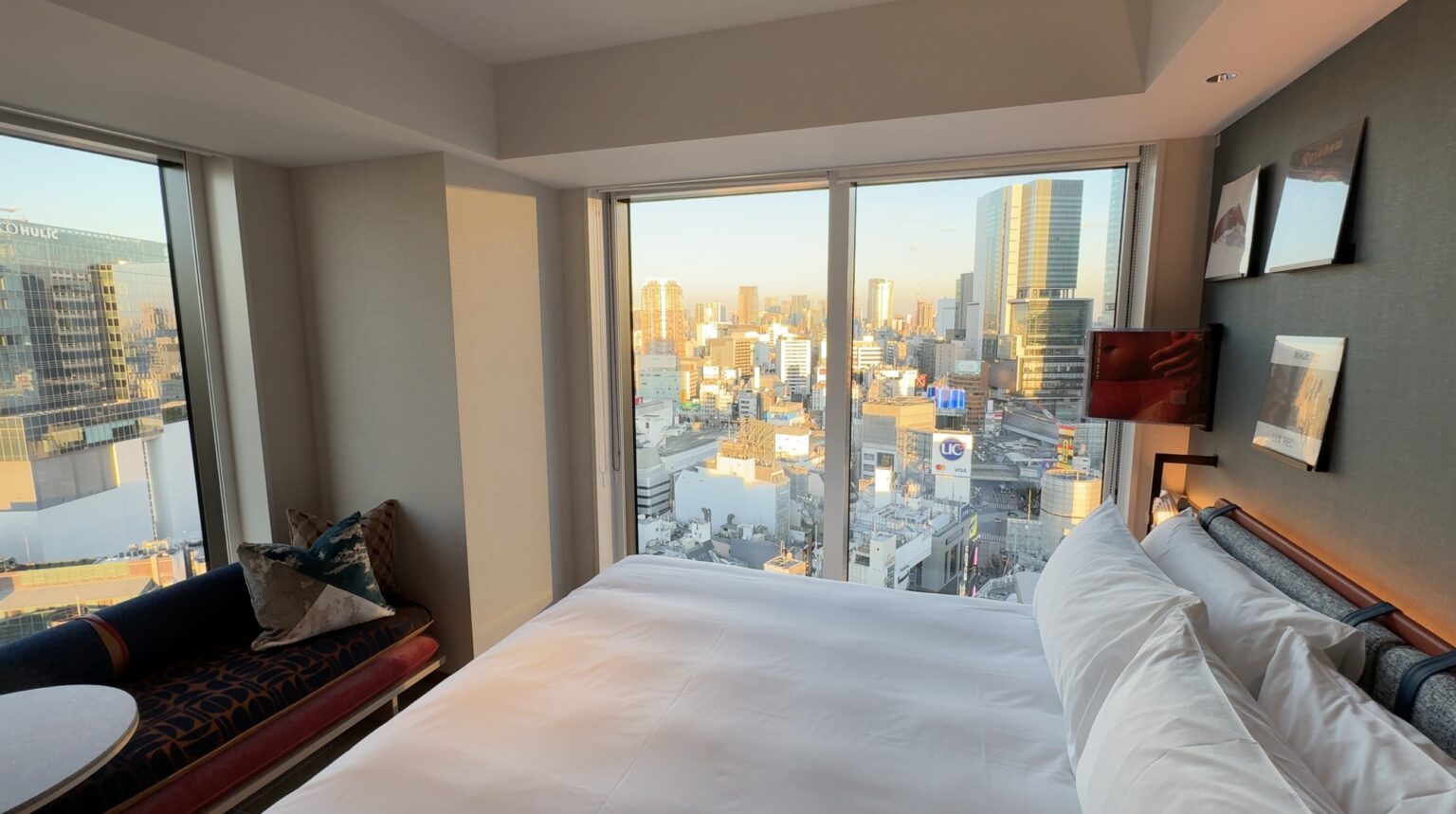
The Shibuya view from our Hotel Indigo room, photographed during our stay.
Watch Our Tokyo Hotel Guide
See the rooms, breakfasts and neighborhoods in our full Tokyo hotel comparison.
Your 15-Tip Guide
Start at the beginning or jump to the decision you’re making now.
1. Yamanote Line
2. Hotel Breakfast
3. Walkable Essentials
4. Japanese Bathing
5. A Rest Day
6. Japanese Sites & Direct Booking
7. Hotel & Coin Laundry
8. Your Tokyo Neighborhood
9. When to Book
10. Luggage Forwarding
11. Hotel Concierge
12. Google Street View
13. Airbnb or Hotel?
14. Unique Hotel Stays
15. Cash Back & Points
01 / FEEL GOOD WHERE YOU STAY
Make the Hotel Work for Your Days
1. Stay Along the Yamanote Line
For a first Tokyo trip, the JR Yamanote Line is an easy place to start your hotel search. The loop connects Shibuya, Shinjuku, Ueno and Tokyo Station, giving you several very different neighborhoods to choose from.
You do not have to stay on the loop for an easy trip. Instead, compare routes to your must-dos and the walk from the right station exit. A nearby subway station can work just as well and save you a long walk through a huge rail station.
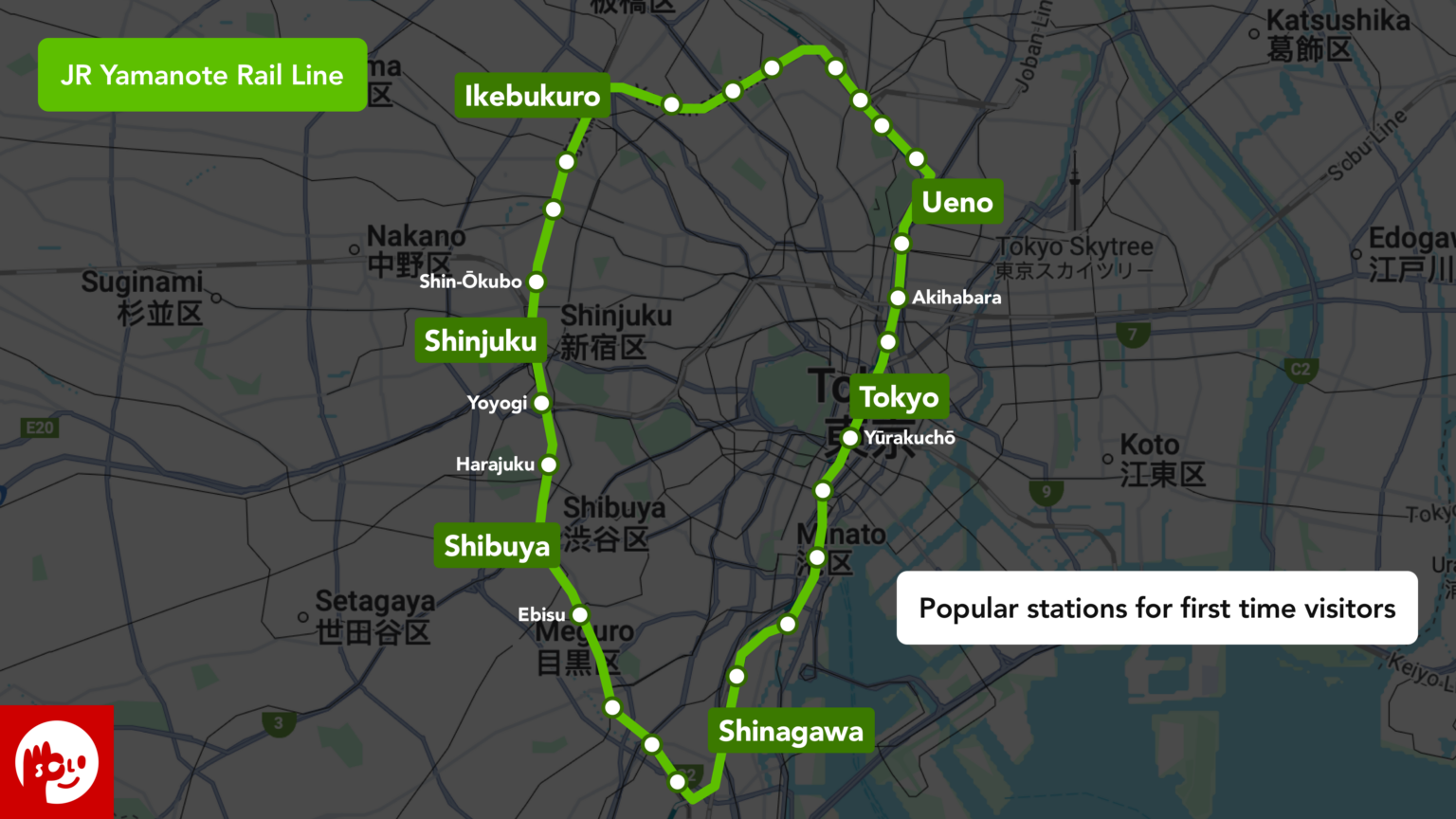
The Yamanote Line connects several useful Tokyo bases. Compare the station walk as well as the train journey.
2. Pick a Hotel with a Breakfast You’ll Enjoy
At Hotel Indigo Shibuya, breakfast downstairs made our mornings easier. We could sit down to fruit, vegetables and a proper meal before a day on foot. There was no need to find a restaurant first.
Compare the rate with and without breakfast, check its hours and look at recent photos. An excellent buffet can be worth building into the day; a nearby bakery may make more sense before an early train. The best breakfast plan is one you will actually use.
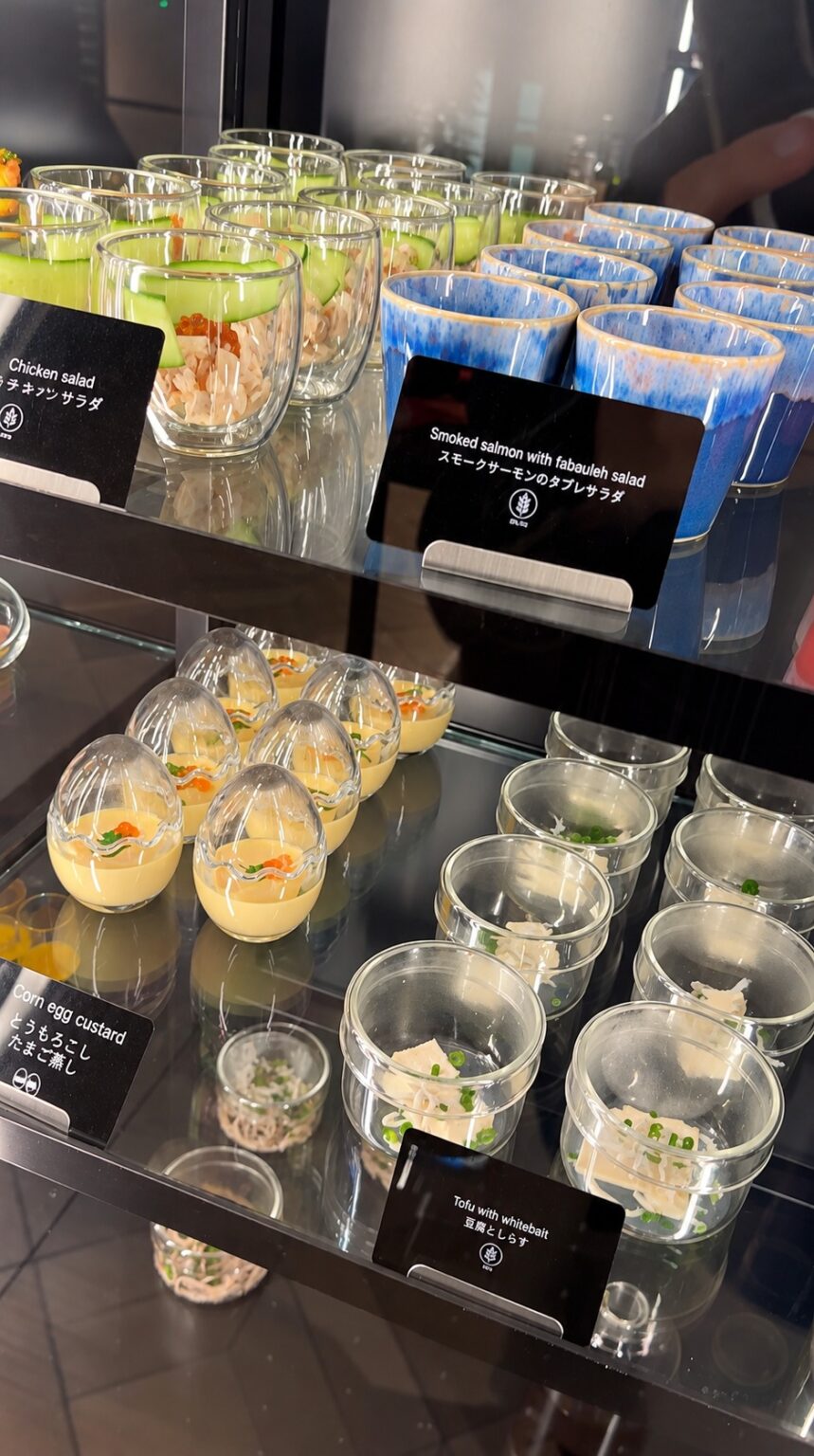
Individual salads and small dishes at Hotel Indigo Tokyo Shibuya.
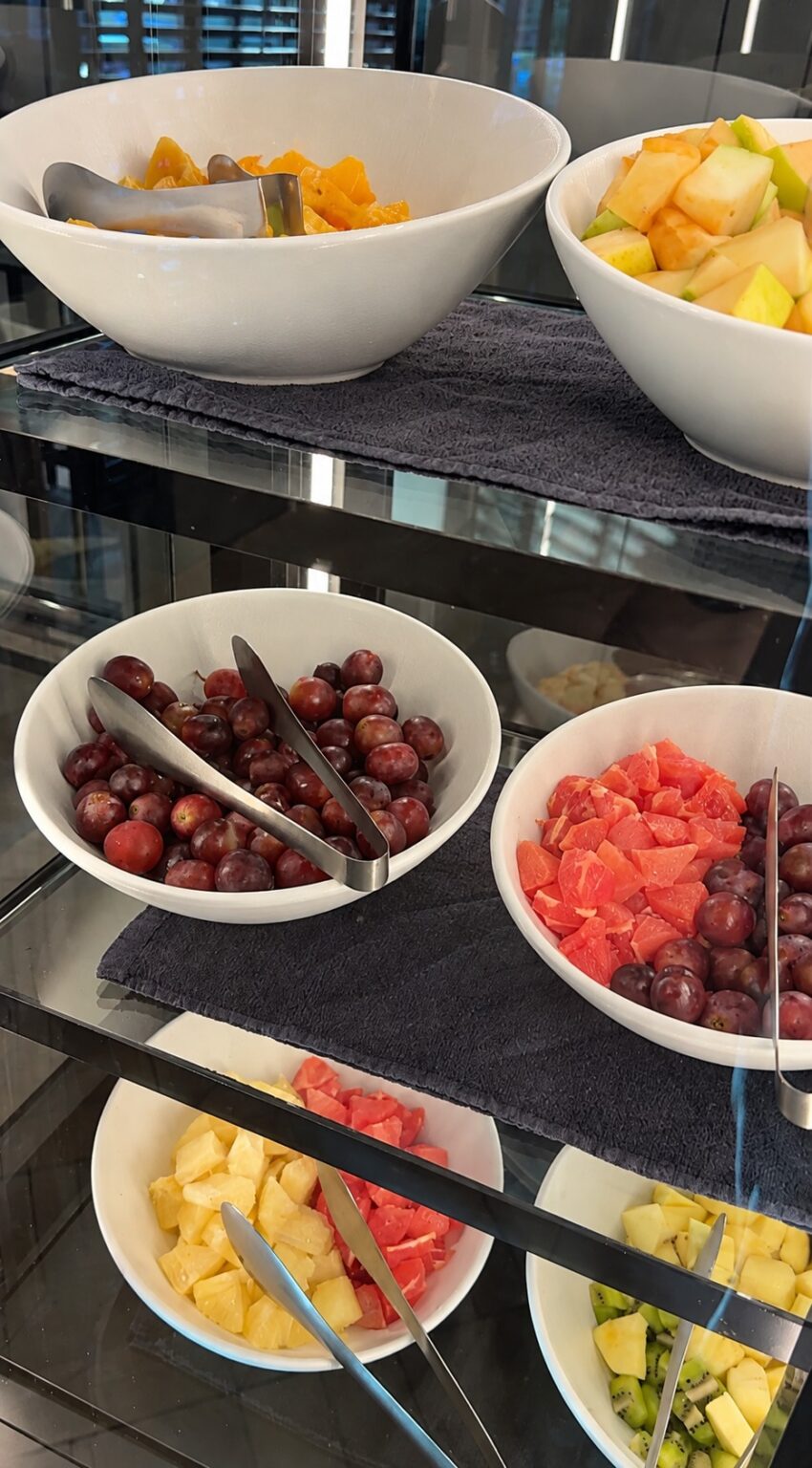
Fresh fruit on the breakfast buffet during our stay.
3. Check What’s Walkable Near Your Hotel
At Indigo, the food and shops around the hotel were useful long after the sightseeing was done. Sometimes we wanted a proper dinner. Sometimes we just wanted to pick up something easy and go back upstairs.
Before booking, save a convenience store, a pharmacy and a few easy places to eat near the entrance. Think about your evenings too. If you plan to stay out late, check the last train or choose somewhere you can walk back from.
4. Make Time for Japanese Bathing Culture
Our Indigo room had a bathtub, which we welcomed after a long day on foot. If your room has one too, pick up bath salts from a pharmacy or Don Quijote. Then make a soak part of your evening.
Check the bathroom for the exact room category you are booking. You can also search for a hotel with a shared bath. Read its bathing rules, hours and tattoo policy, and check whether the bath is an onsen or another type of communal bath.
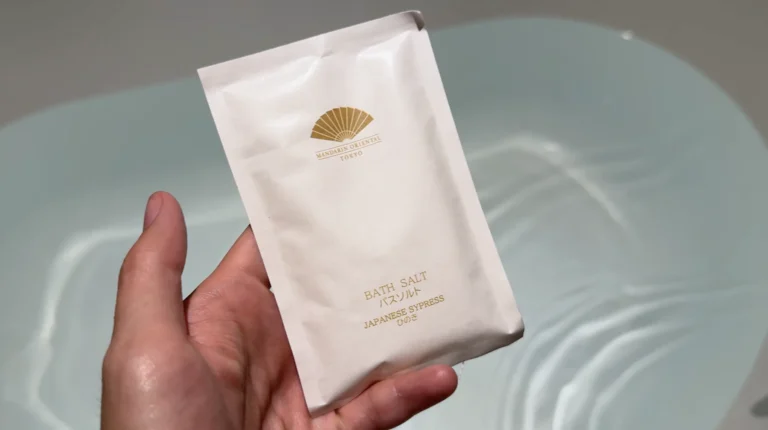
A SMALL COMFORT AFTER A LONG DAY
Pick Up Japanese Bath Salts
Look for these terms at a pharmacy or Don Quijote. Choose a product you like, then follow its instructions for your room’s bathtub.
入浴剤 · Nyūyokuzai · Bath additives
バスソルト · Basu soruto · Bath salts
Use them in your own bath only where the hotel allows it. Do not add products to a shared bath.
5. Plan a Rest Day
A hotel can be more than a place to sleep. During our Shibuya stay, a simple bento and the view from bed made a very good slower day. We were happy spending time in the room, so choosing it well paid off.
Leave some room for jet lag, tired feet and a morning without an alarm. Japan will take more than one trip to explore. Choose the experiences you care about most and give yourself enough time to enjoy them.
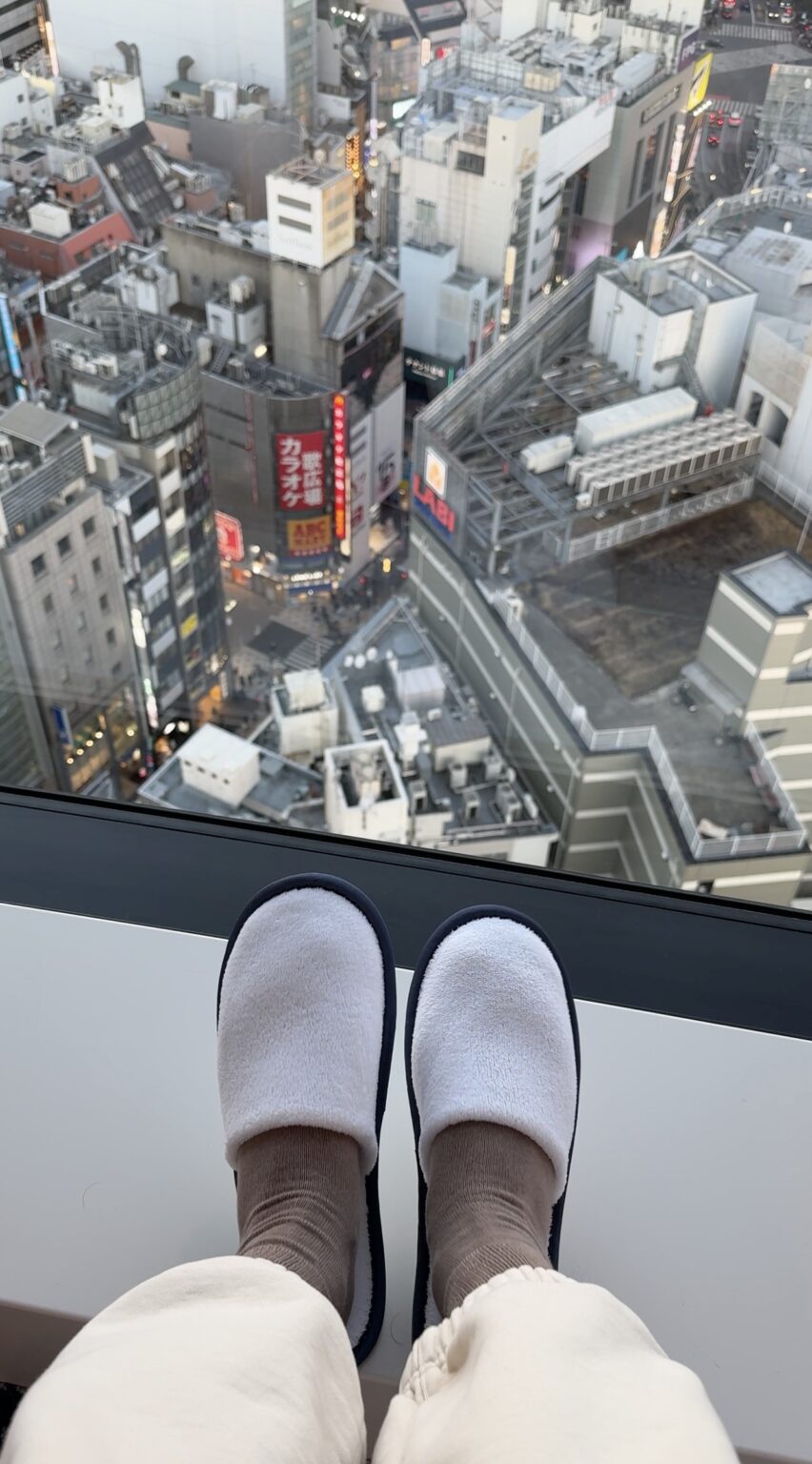
Slippers on, Shibuya below: the view from our Hotel Indigo room.
02 / PLAN THE PRACTICAL DETAILS
Find the Right Booking and Base
6. Compare Japanese Booking Sites and the Official Hotel Website
When we compared prices for Mitsui Garden, the direct Japanese website showed a rate ¥3,000 lower than the other options we found. That was a useful reminder to compare more than one booking channel.
Check the hotel’s official Japanese and English pages alongside booking platforms. Match the room, guest count, meal plan and cancellation terms before comparing prices. A member rate or package can change the value, but direct booking will not always be the cheapest option.
7. Pack Lighter with a Laundry Plan
Access to a washing machine can be more useful than another outfit in your suitcase. At Mitsui Garden, the machines were coin-operated and available without a reservation. On a longer Japan trip, this is an amenity worth checking early.
Self-service machines and a paid laundry service are different things. Ask about payment, detergent and drying. If the hotel has no machines or they are busy, search コインランドリー in Maps and check the nearby laundromat’s hours.
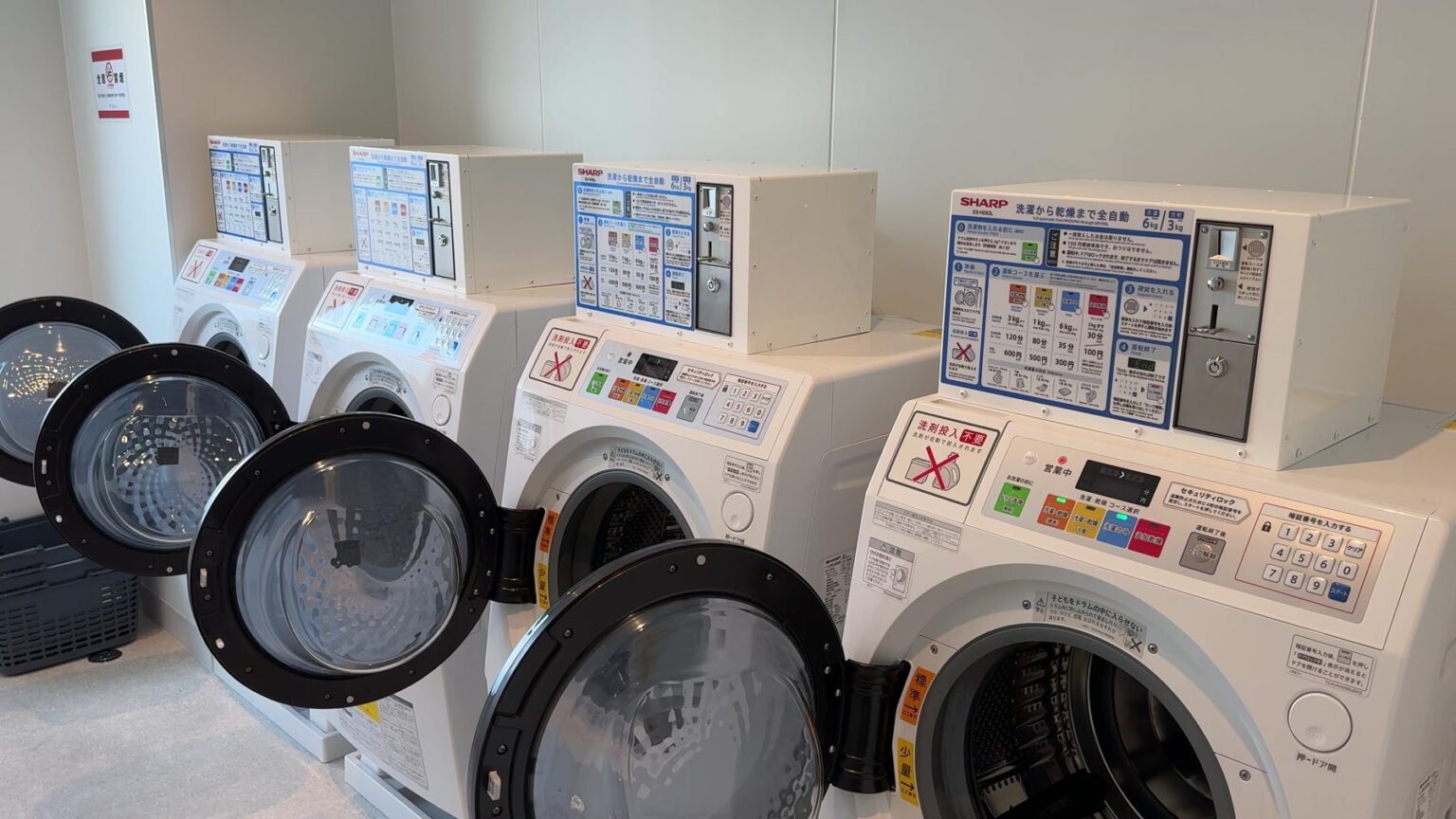
SAVE THIS SEARCH
Find a Coin Laundry Near Your Hotel
コインランドリー
Koin randorī · Self-service laundry
1. Search near your hotel. Paste コインランドリー into Google Maps, then add your hotel name or neighborhood.
2. Check before carrying a load. Look at opening hours, recent photos and the route. Check how payment and detergent work.
3. Allow time to dry. Read the machine labels and clothing care instructions. Keep an eye on the finish time.
8. Pick the Neighborhood That Fits Your Trip
For a friend’s first Japan trip, we chose Shibuya because there was so much outside the hotel. We also like the Tokyo Station side when shopping and onward train travel are a big part of the plan.
Choose where you want to spend your evenings as well as where you want to sightsee. If you return to Tokyo after visiting other cities, a second neighborhood can give that last part of the trip a different feel. For a short stay, one convenient base keeps things simple.
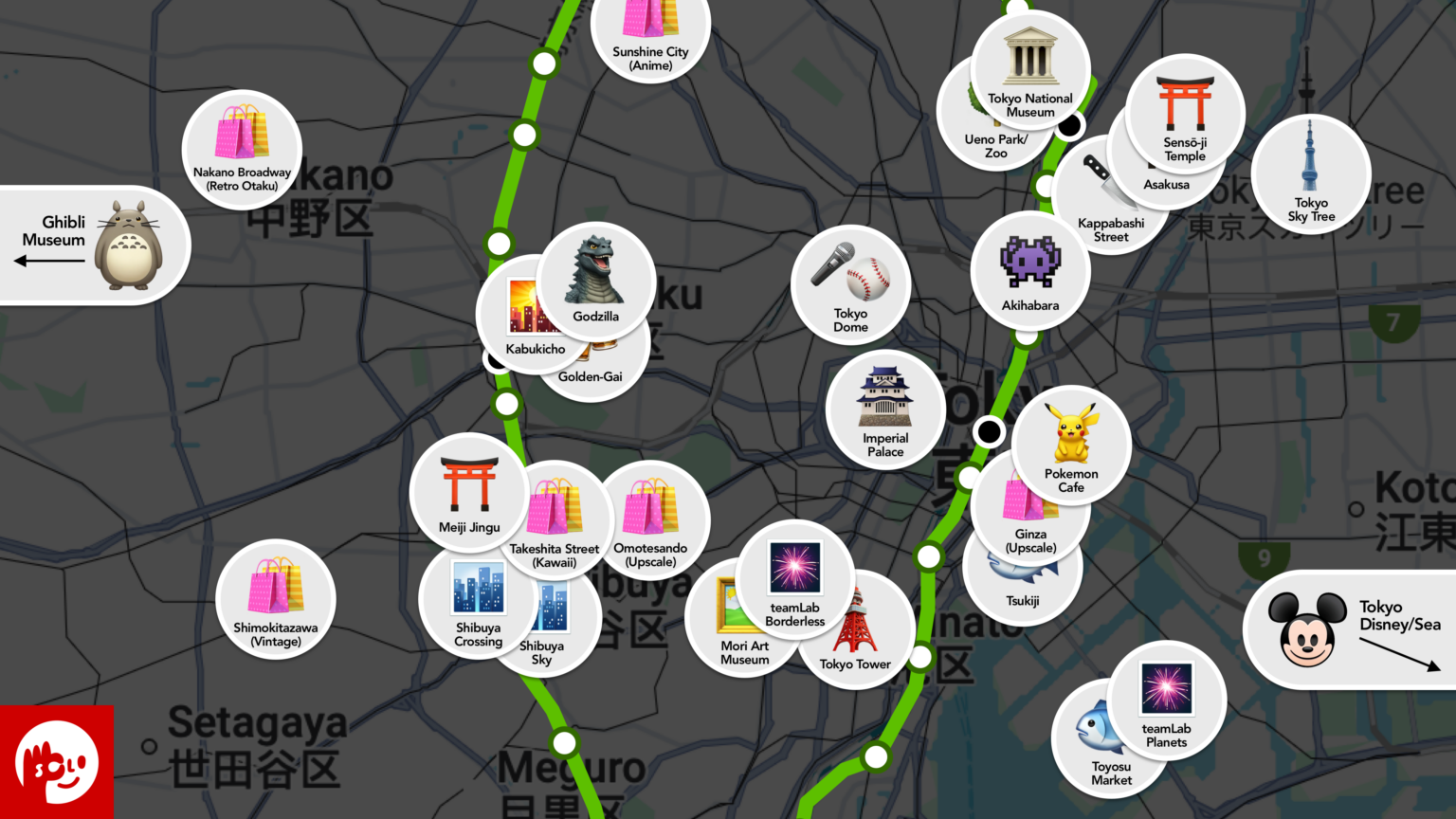
Our Yamanote Line overview from the video. Check current door-to-door routes for the hotel you choose.
A Quick Neighborhood Comparison
Shibuya
For shops, food and lively evenings. A useful base for Harajuku and the western side of Tokyo.
Tokyo Station, Ginza & Nihonbashi
For shopping and onward travel. Check the actual station walk; these are distinct neighborhoods.
Shinjuku
For bright lights, nightlife and major rail connections. Pay attention to the station exit.
Asakusa
For Sensoji, older streets and a different evening pace. Compare routes to your other plans.
Ueno
For Ueno Park, museums and eastern Tokyo. Check the hotel’s station and luggage route.
Yoyogi Park & Tomigaya
For cafes, smaller shops and time around the park, with Shibuya still part of the wider neighborhood.
9. Start Early, Then Book When Your Hotel Opens Its Dates
Hotels in Japan do not all open bookings at the same time. Start researching once your trip dates take shape. If a property shows no rooms far ahead, it may not have released those dates yet. Check its own calendar before assuming it is sold out.
For cherry-blossom season, Golden Week, autumn travel or the New Year period, start at the early end of the timeline below. These are planning checkpoints, not a guarantee of the lowest rate. Read the actual payment and cancellation conditions of every reservation.
6–12 Months Ahead
Choose your area and shortlist hotels. Check when each property releases rooms. If your dates are open, consider securing a suitable booking with cancellation terms you can live with.
3–6 Months Ahead
Check hotels that had not opened your dates and book when the room you want becomes available. Compare the same room and rate terms across booking channels.
1–2 Months Ahead
Recheck your booking, payment dates and cancellation deadline. Compare a better offer only while you can still change plans without a penalty.
Why check direct? MUJI Hotel Ginza’s published notice describes bookings up to 12 months ahead on its official site and up to 6 months ahead through external sites. Check the current calendar for your dates. Read MUJI’s booking-window notice ↗
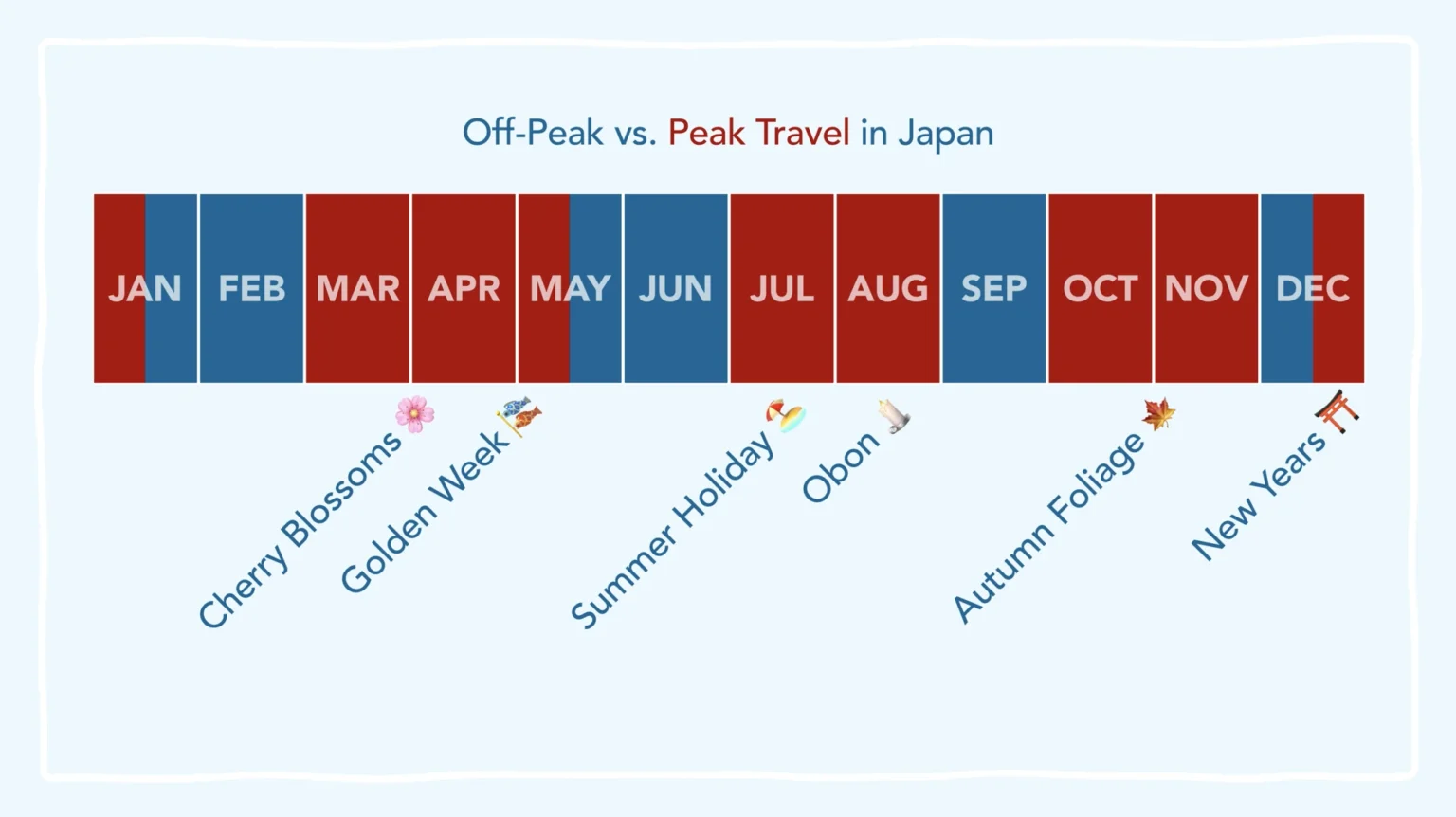
Our video’s broad seasonal overview. Busy periods vary by destination, school holidays and local events; the colors are a planning guide rather than a live price forecast.
10. Use a Luggage Forwarding Service
Moving between cities is easier without every bag on the train. Your hotel front desk may be able to help with luggage-forwarding forms. This is especially useful when you leave Tokyo for another stop. Read our guide to luggage forwarding in Japan →
Ask both hotels whether they can send and receive your bags, then confirm the delivery date with the carrier or front desk. Keep an overnight bag and anything you need before delivery with you. Timing varies by route, so arrange it before checkout rather than assuming same-day arrival.
Before you send: Confirm the receiving hotel, the delivery date and what you will keep with you. Check Yamato’s delivery options ↗
03 / GET MORE FROM THE STAY
Use the Details That Make a Difference
11. Ask Your Hotel’s Concierge Before the Trip
Before our Mandarin Oriental stay, we emailed the concierge about booking the Sunrise Seto sleeper train. Their detailed reply made the process much easier to follow. They even offered to help arrange it.
If your hotel has a concierge, ask early about a tricky journey or a restaurant you hope to visit. Give them your dates, group size and preferences. They can explain the options, but access to a sold-out attraction is not guaranteed.
12. Walk the Route in Google Street View
Before you commit to a hotel, take a virtual walk around it. Look for the entrance, the useful station exit and the streets you will follow with your bags. It can make arrival day feel much more familiar.
Use walking directions for the final leg and save a few nearby places you want to try. Look for major crossings, hills or stairs that matter to your group. Street View images can be dated, so check current access instructions with the hotel as well.
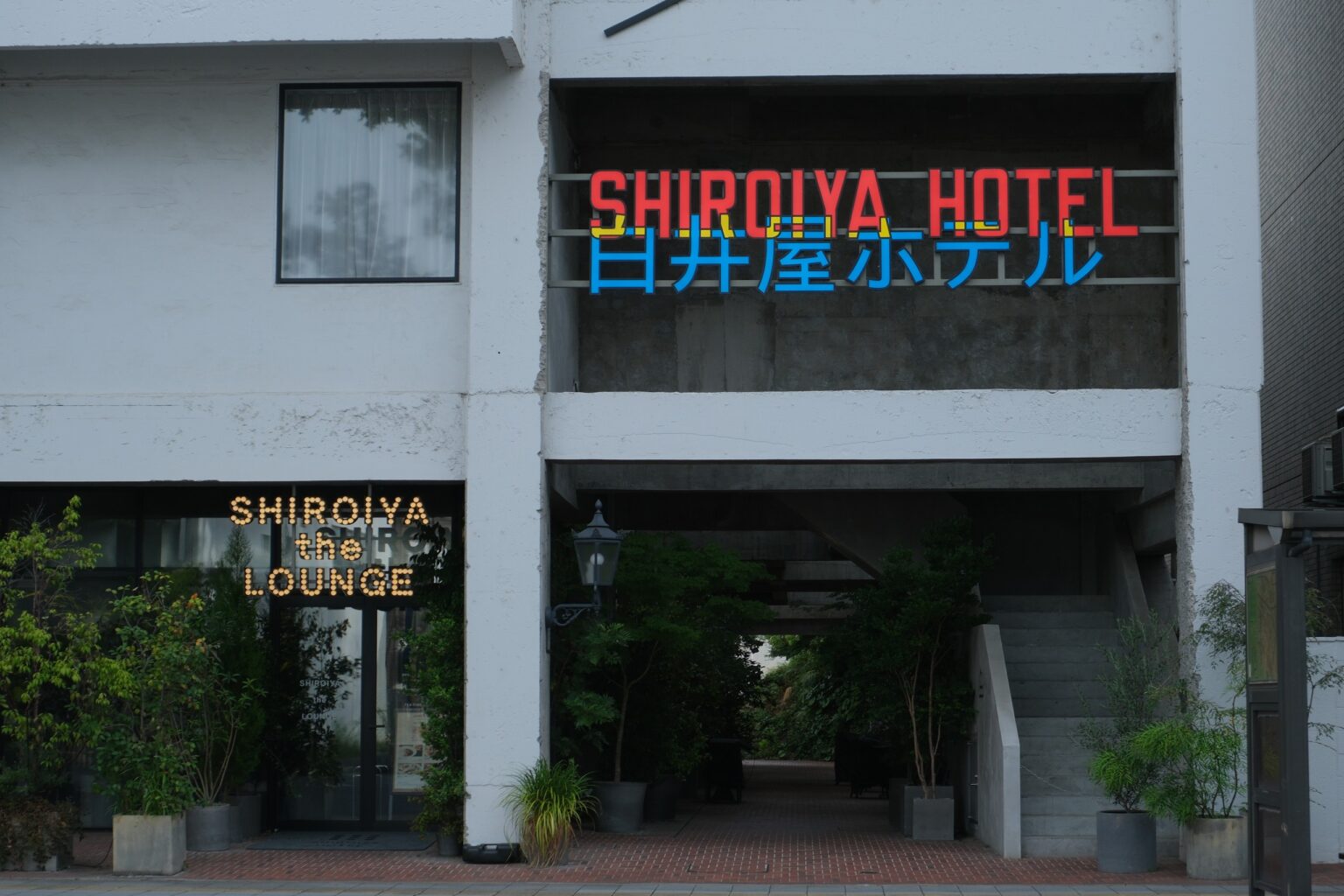
The street entrance at Shiroiya Hotel in Maebashi. Check your own hotel’s entrance and approach before arrival.
13. Compare Airbnb with a Staffed Hotel
A rental can be a good fit if you want a kitchen, more space or a longer stay in one neighborhood. For a first trip to Japan, we often value a staffed hotel for questions, luggage storage and help forwarding bags.
Compare the full cost and the practical details: station walk, check-in process, cleaning fees, rubbish instructions and luggage arrangements. A rental may work out well for your group, but the lower nightly headline price does not tell you the whole story.
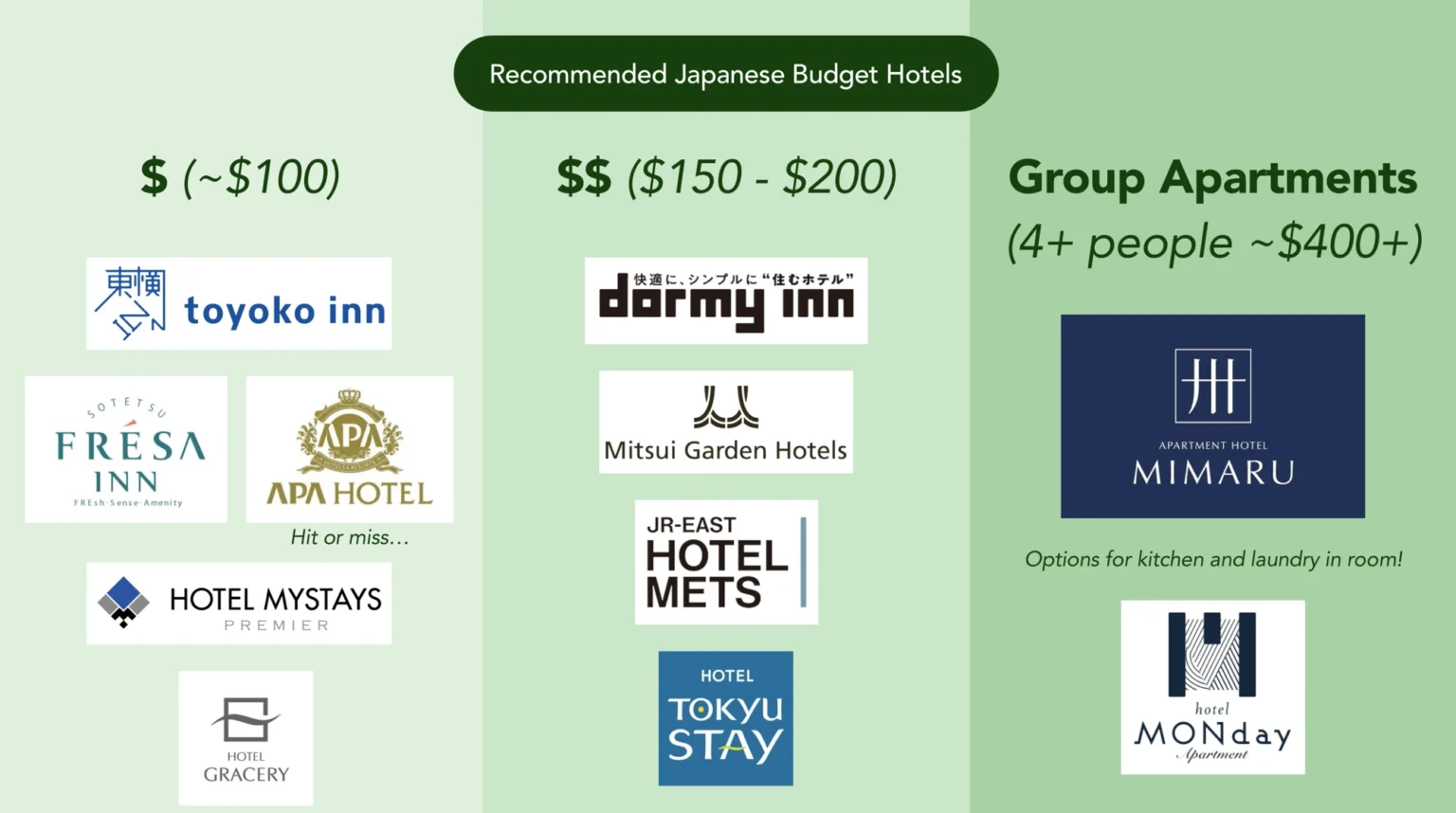
Hotel chains and apartment hotels to compare, from our video. Dollar figures are examples from the video, not current quotes; room types and facilities vary by property.
14. Let One Hotel Be Part of the Experience
Tokyo has room for much more than a standard city hotel. Look at artist-designed rooms, character rooms or a small boutique property if a memorable stay is part of your plan. Our TRUNK(HOTEL) YOYOGI PARK stay was a favorite for the atmosphere and the neighborhood around it.
Two ideas to research are Park Hotel Tokyo’s Artist Rooms and MIMARU’s Pokémon Rooms. Choose the exact room category that includes the feature you want. For families and groups, also compare the bed layout, kitchen and laundry facilities rather than assuming every room is the same.
15. Collect Cash Back or Points When the Booking Makes Sense
Check whether your hotel booking can earn cash back or points. We used American Express points for our Mandarin Oriental stay. The booking also came with benefits that added to the experience.
Before using a cash-back portal, read the offer, exclusions and tracking steps. Compare the final price and cancellation terms first, then treat the reward as an extra. Not every rate or booking will qualify.
Three Tokyo Stays Behind the Tips
The video compares stays around the $300, $500 and $1,000 marks. Those figures are from our trip. Read the reviews for room details and our experience at each hotel.

Hotel Indigo Tokyo Shibuya
Our King Premium Scramble View room had a bath and wide views over Shibuya. Breakfast downstairs and the lively streets outside made this an easy base for our stay.
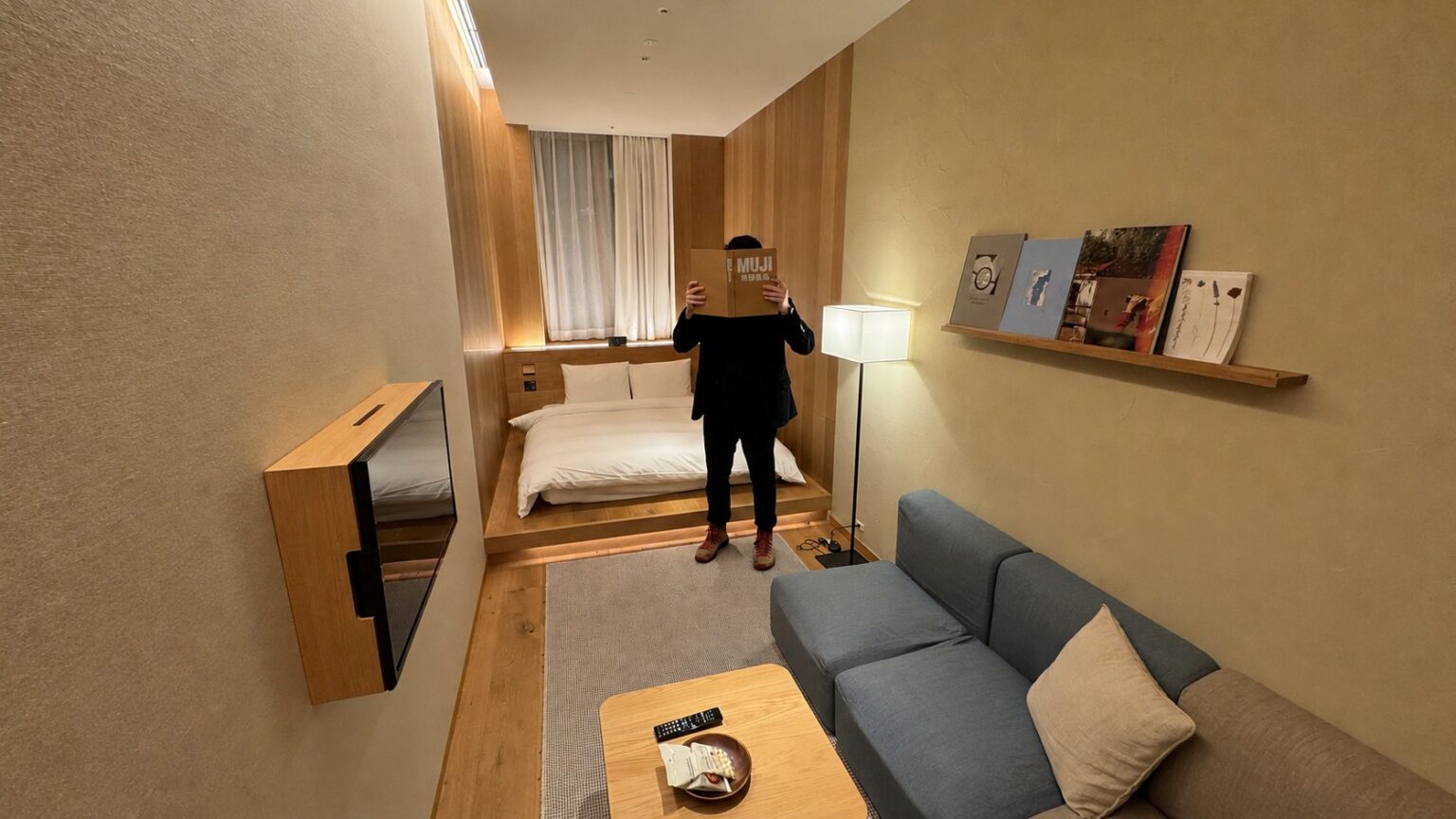
MUJI Hotel Ginza
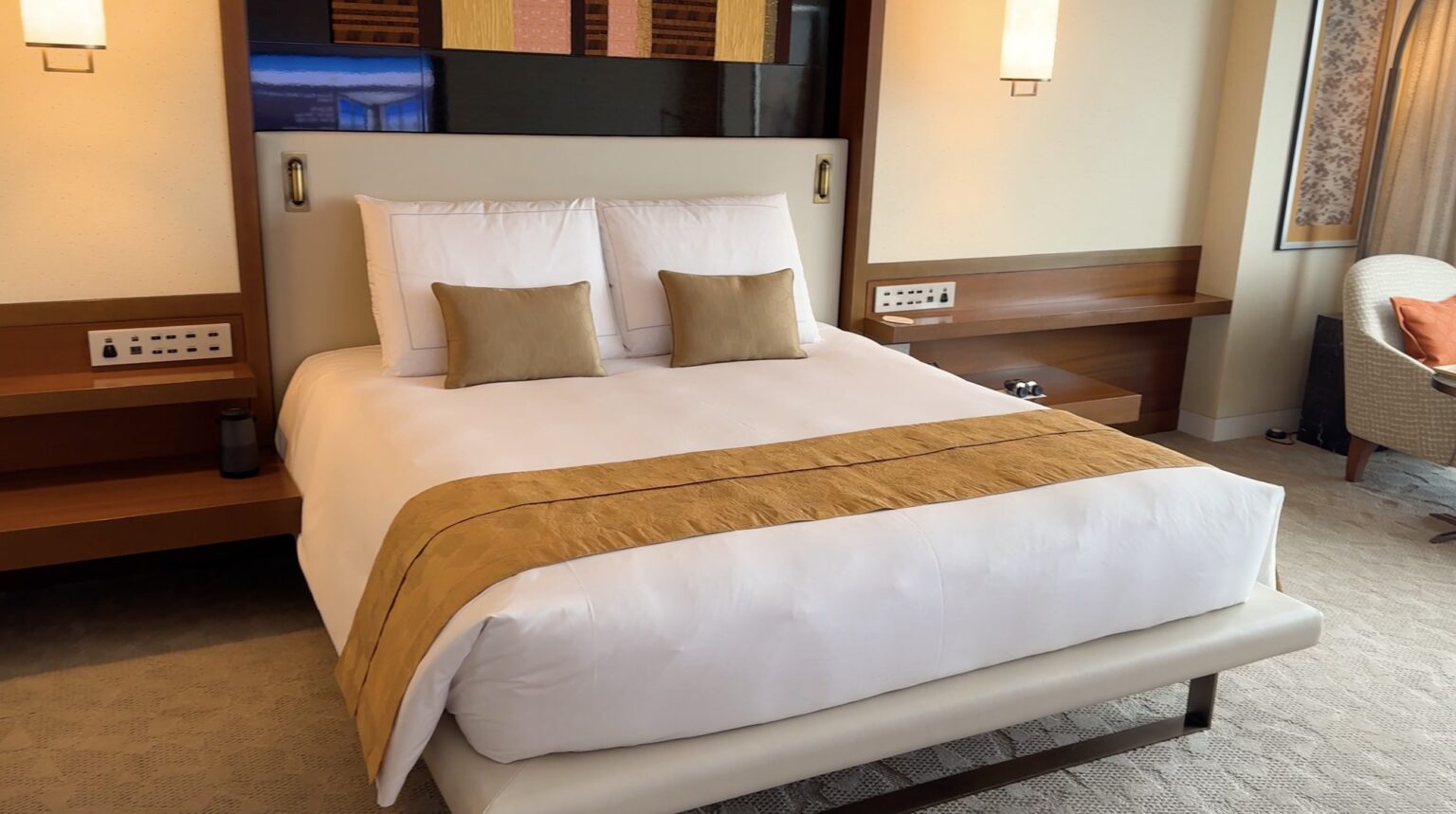
Our Type C room above MUJI’s flagship store paired a raised bed with a sofa and low table. The review takes you through the room, breakfast and the MUJI items we brought home.

Mandarin Oriental, Tokyo
Our Deluxe Premier room came with sweeping city views. Thoughtful turndown touches and helpful concierge advice made the service as memorable as the room.
Before You Book
Location: Have you checked the station exit, walking route and nearby food?
Room: Does the exact category have the bed, bathroom and space you need?
Rate: Are breakfast, taxes, payment dates and cancellation terms clear?
Practicalities: Do laundry and luggage plans work for your route?
Room tours and screenshots are from our own trip. Rates, hotel services and booking policies can change; use the official links to confirm the details for your dates.
FREE JAPAN PLANNING TOOL
Know When to Book Your Japan Must-Dos
Once your hotel is sorted, plan the experiences that need a little more notice. Choose your must-dos, add your travel dates and see when to book or apply with our Japan Booking Planner.
Open the Japan Booking Planner →Tokyo Time + Your Local Time · Calendar Export · Free to Use