
An Ode to Japan’s Blue Trains
How Japan’s Blue Trains crossed the country after dark, why they disappeared and where you can still sleep or dine aboard the original carriages.
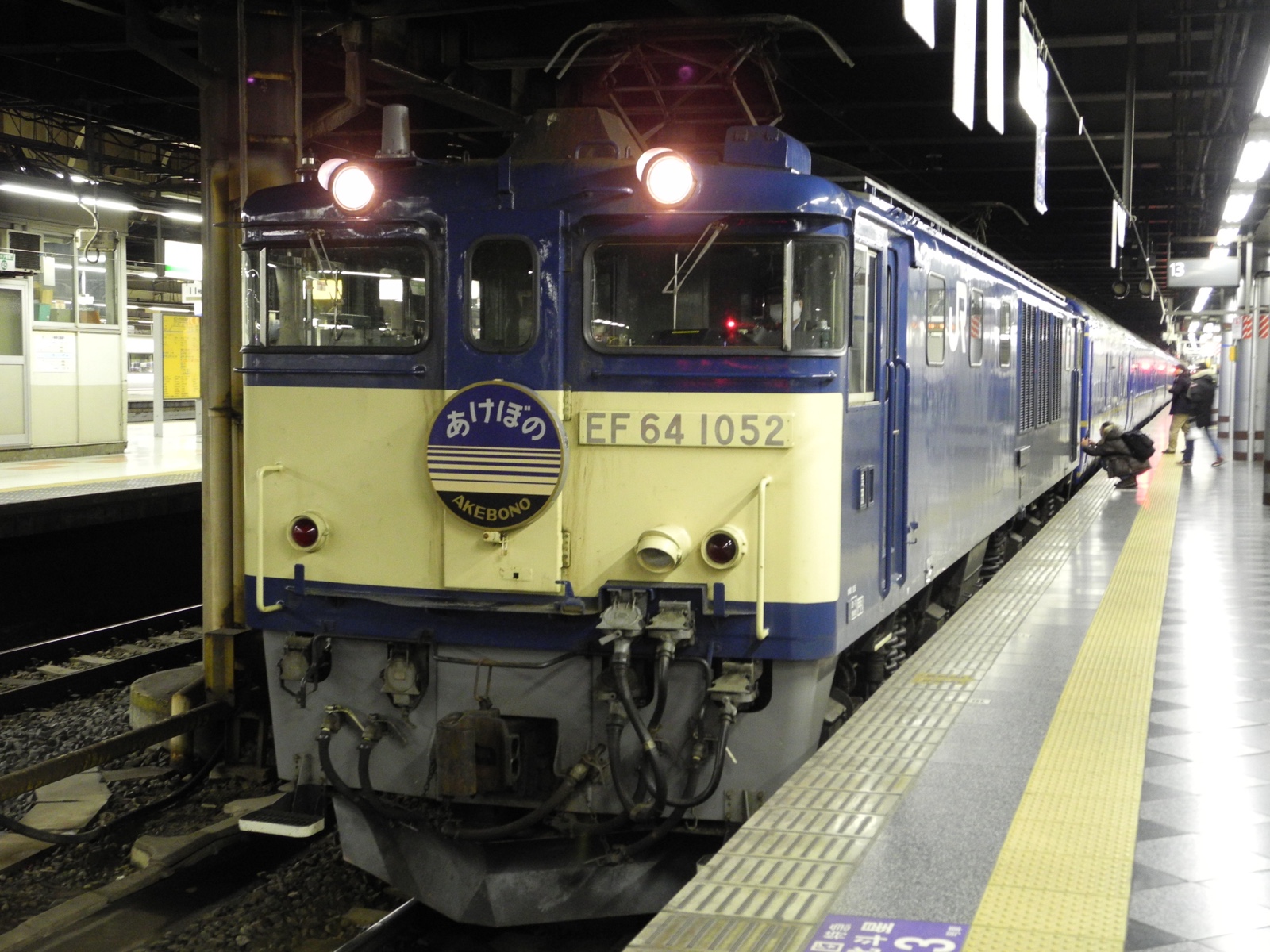
The Akebono at Ueno Station, 2012.
We boarded Japan’s last regularly scheduled sleeper train, the Sunrise Express, at Himeji after dark. Once we’d settled into our cabin, there was nothing left to do until morning. By the time we woke up, we were in Tokyo.
The Sunrise Express feels like a time capsule from when an overnight train was an ordinary way to cross Japan. Even its colors suit the quiet of the ride. The muted red is called Morning Glow and the beige Morning Mist. That night made us curious about the deep-blue sleepers that once crisscrossed Japan and what was left of them.
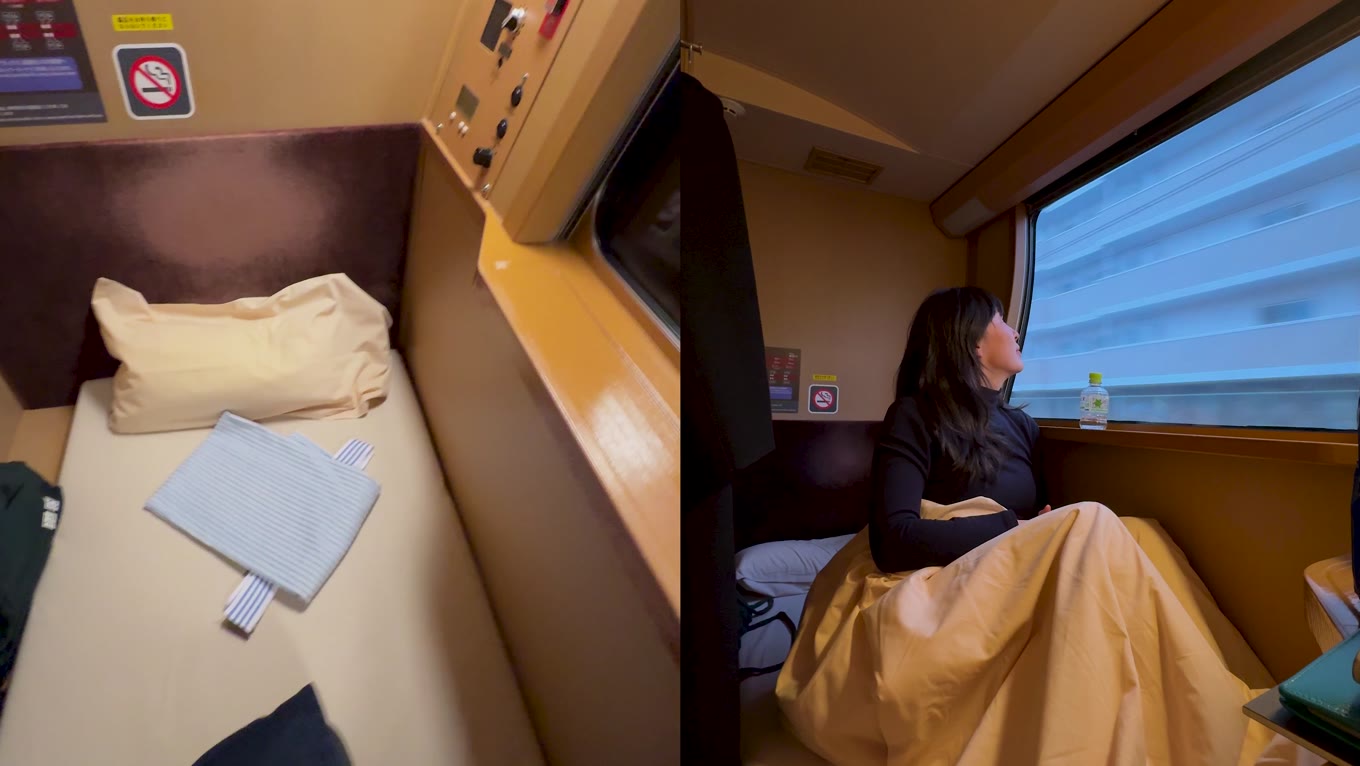
Our cabin aboard the Sunrise Express.
Why Were They Called Blue Trains?
Japan’s Blue Trains took their name from the deep-blue paint on a generation of sleeper carriages. In 1958, Japanese National Railways introduced the Series 20 cars on the Asakaze between Tokyo and Hakata. The train had air conditioning and a dining car. Later sleeper fleets kept the blue finish. In Japanese, the name is ブルートレイン (burū torein).
ブルートレイン
Blue Train · Burū Torein
The Rise of the Shinkansen
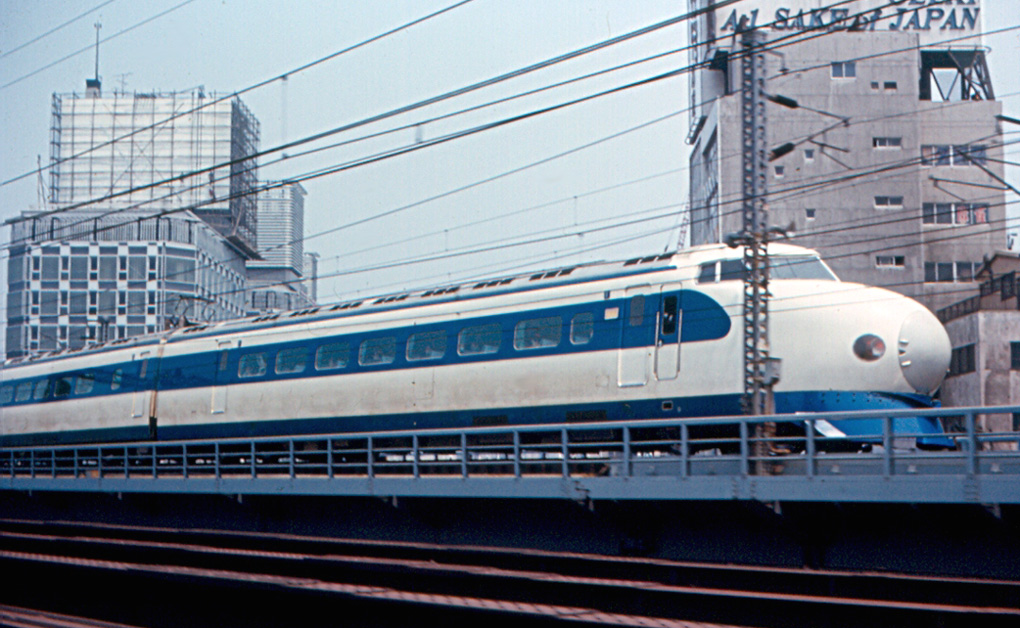
A Series 0 Shinkansen near Yurakucho, Tokyo, 1967.
When the Tokaido Shinkansen opened in 1964, it cut the Tokyo–Osaka trip from 6½ hours to four. A year later, the trip took just 3 hours and 10 minutes. Then, in 1975, the Sanyo Shinkansen reached Hakata, putting more long-distance trips within reach during the day.
Even so, Blue Trains ran for decades. More convenient flights and express buses also played a part in their decline. In 1998, as older sleepers started to disappear, the new Sunrise trains began overnight service to Izumo and Takamatsu.
From Blue Trains to the Sunrise Express
Each bar shows the years a service ran on the same scale. The Shinkansen and Sunrise Express continue to the right edge.
1949
1970
1990
2010
2026
Shinkansen
1964–Present
Ginga
1949–2008
Akatsuki
1965–2008
Akebono
1970–2015
Hokutosei
1988–2015
Sunrise Express
1998–Present
Cassiopeia
1999–2025
The timeline starts the Ginga when it first ran under that name. The Akebono ended regular service in 2014 and made its last seasonal run in 2015. Meanwhile, the Cassiopeia ran regularly through 2016 and returned for charter trips through 2025.
When Blue Trains Ruled the Rails
By the 1970s, Blue Trains had become a national sensation. The December 1993 timetable captures a later moment when all four trains featured here ran alongside 13 other named Blue Train services. You could book a bed from Tokyo to Kagoshima, from Ueno to Sapporo or from Osaka along the Sea of Japan coast. On the map, services that shared tracks follow the same line.
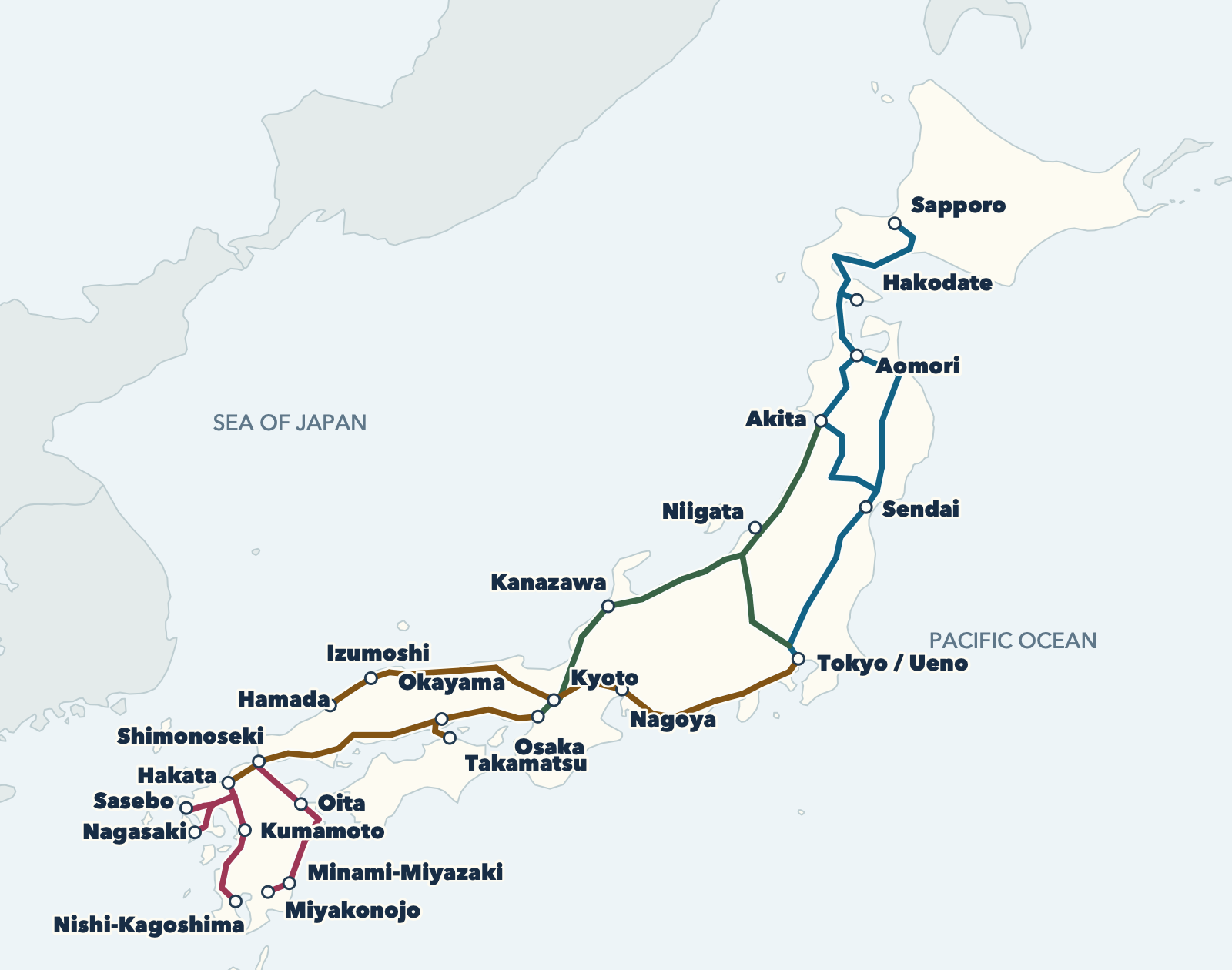
The list groups trains by service and includes their scheduled branches.
Northeast and Hokkaido
Hokutosei · Ueno–Sapporo
Akebono · Ueno–Aomori via Shinjo
Sea of Japan Coast
Chokai · Ueno–Aomori via Niitsu
Hokuriku · Ueno–Kanazawa
Nihonkai · Osaka–Aomori or Hakodate
Tsurugi · Osaka–Niigata
Tokyo to Western Japan
Ginga · Tokyo–Osaka
Izumo · Tokyo–Izumoshi or Hamada
Seto · Tokyo–Takamatsu
Asakaze · Tokyo–Shimonoseki or Hakata
Kyushu Branches
Sakura · Tokyo–Nagasaki and Sasebo
Mizuho · Tokyo–Kumamoto and Nagasaki
Hayabusa · Tokyo–Nishi-Kagoshima
Fuji · Tokyo–Minami-Miyazaki
Akatsuki · Kyoto–Nagasaki and Sasebo
Naha · Shin-Osaka–Nishi-Kagoshima
Suisei · Shin-Osaka–Miyakonojo
Four Names for the Night
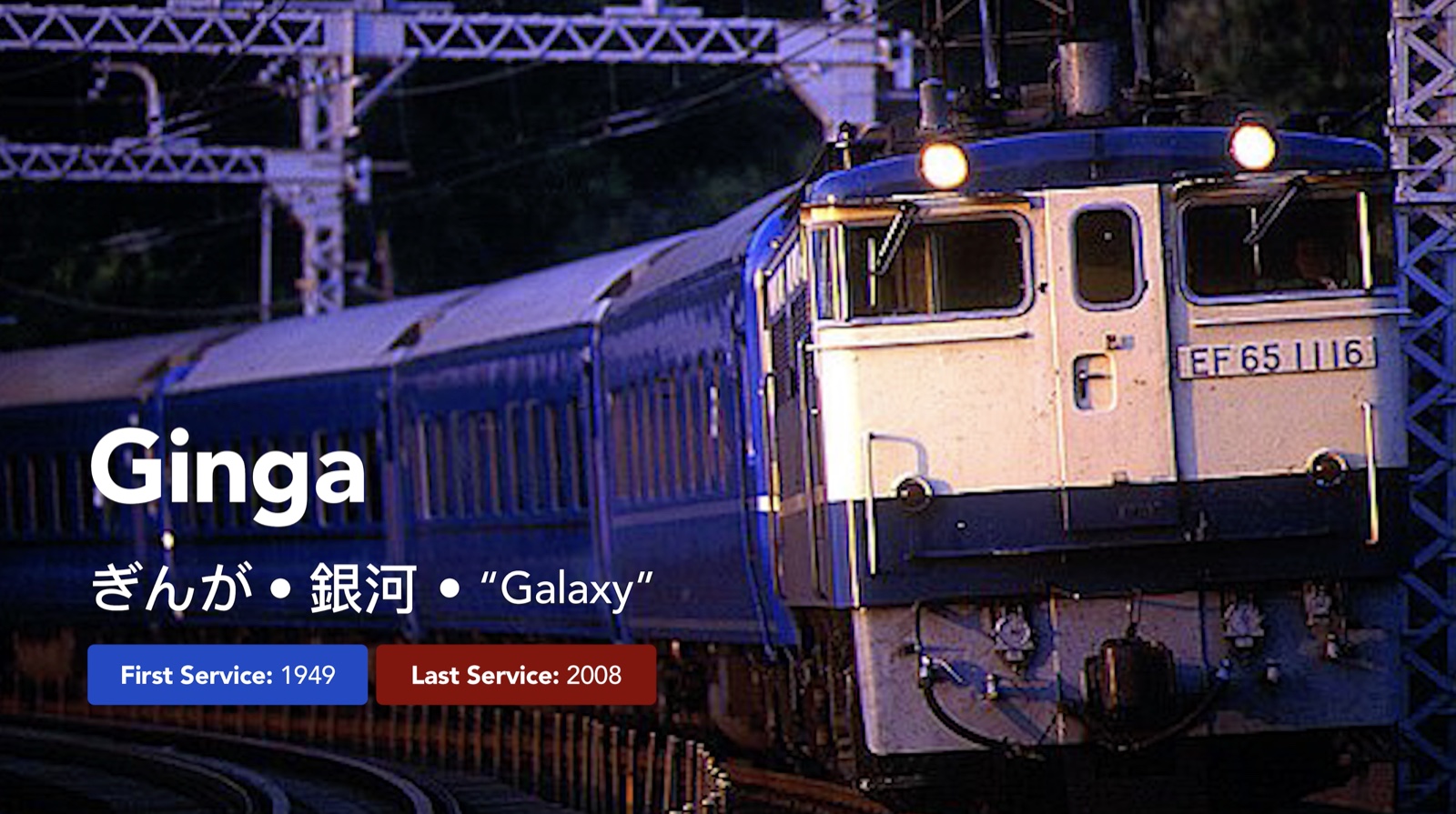
Ginga
銀河 · Galaxy · Tokyo–Osaka
Even after the last bullet train had left, you could still travel overnight between Tokyo and Osaka. You could board late in the evening and reach either city before the first Shinkansen arrived the next morning. The Ginga made its final run in March 2008.
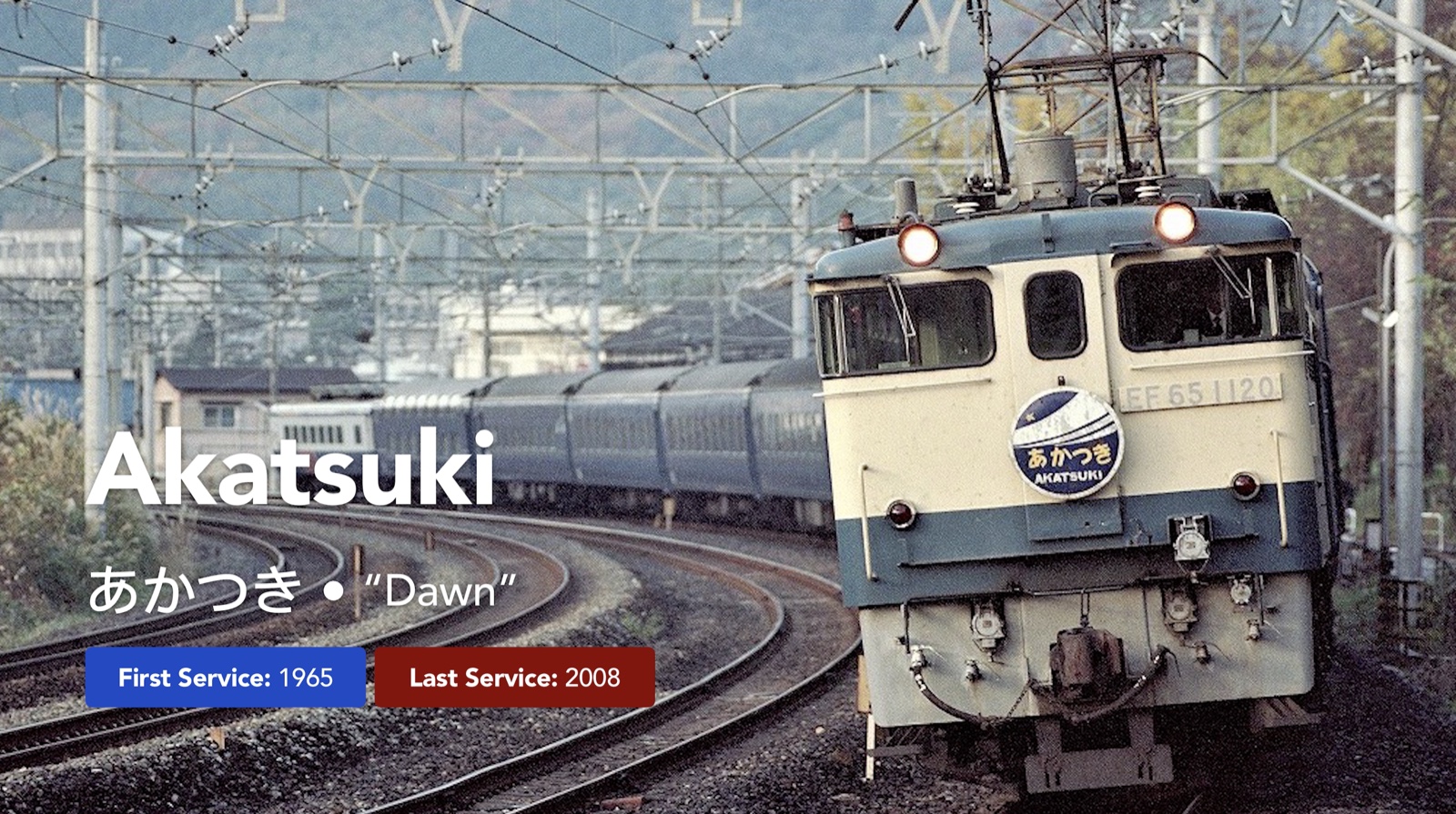
Akatsuki
あかつき · Dawn · Kyoto–Nagasaki
In its final years, the Akatsuki ran between Kyoto and Nagasaki. For part of the trip, it traveled with another sleeper, the Naha. At Tosu in Kyushu, the trains split. From there, the Akatsuki continued to Nagasaki and the Naha headed for Kumamoto. Both services ended in March 2008.
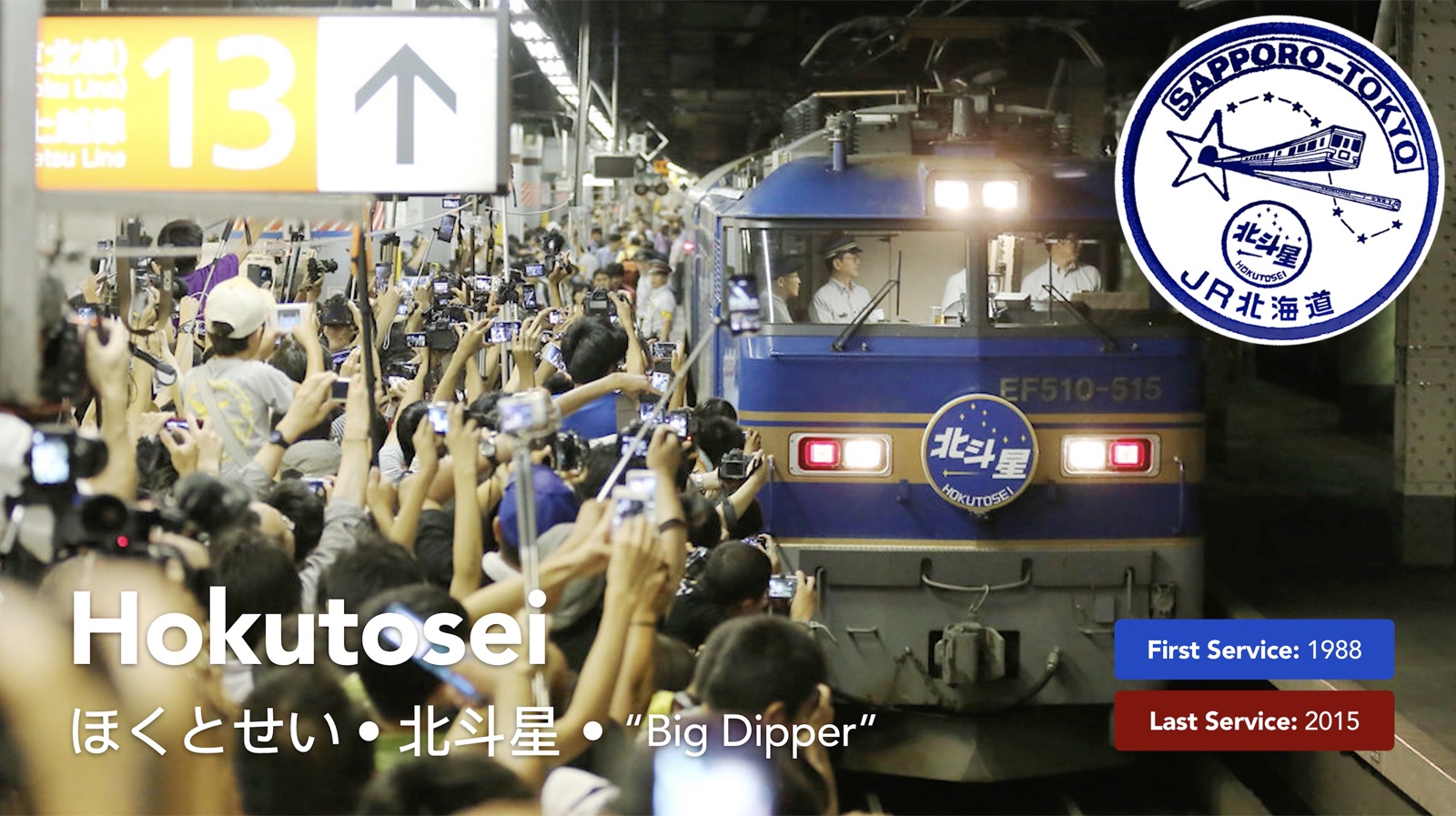
Hokutosei
北斗星 · Big Dipper · Ueno–Sapporo
The Hokutosei began running in 1988, when the Seikan Tunnel opened between Honshu and Hokkaido. The trip from Tokyo to Sapporo took about 16 hours. Along the way, passengers could have dinner in the Grand Chariot dining car. On the stamp, seven stars above the train show the Big Dipper that gave it its name.
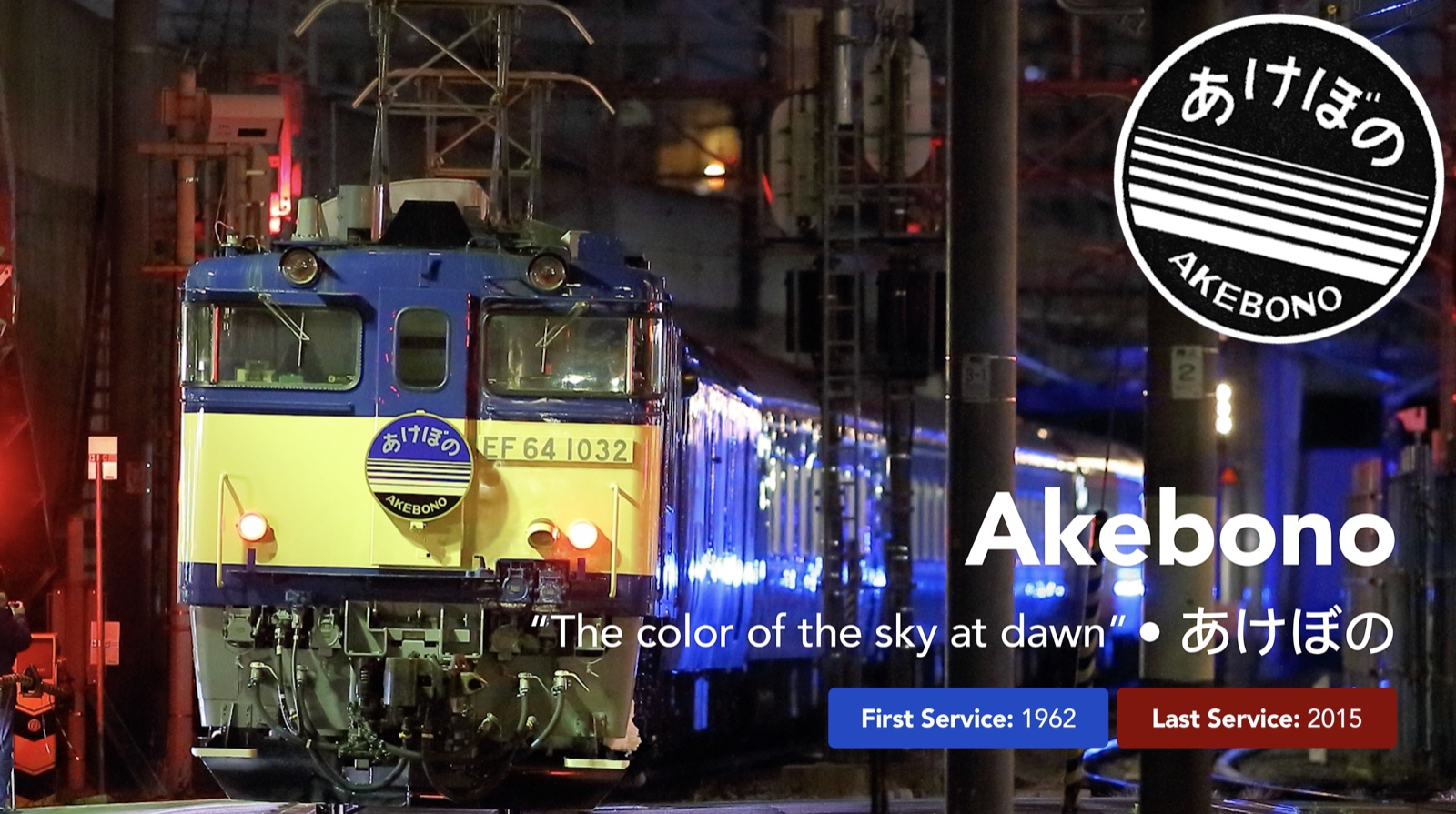
Akebono
あけぼの · First Light · Ueno–Aomori
An evening departure from Tokyo’s Ueno Station would take you through the mountains to Nagaoka. From there, the Akebono followed the Sea of Japan coast through Sakata and Akita before heading inland through Hirosaki. By morning, passengers were stepping off in Aomori, near the northern tip of Honshu. The Akebono made its final run in January 2015.
Blue Trains in Culture
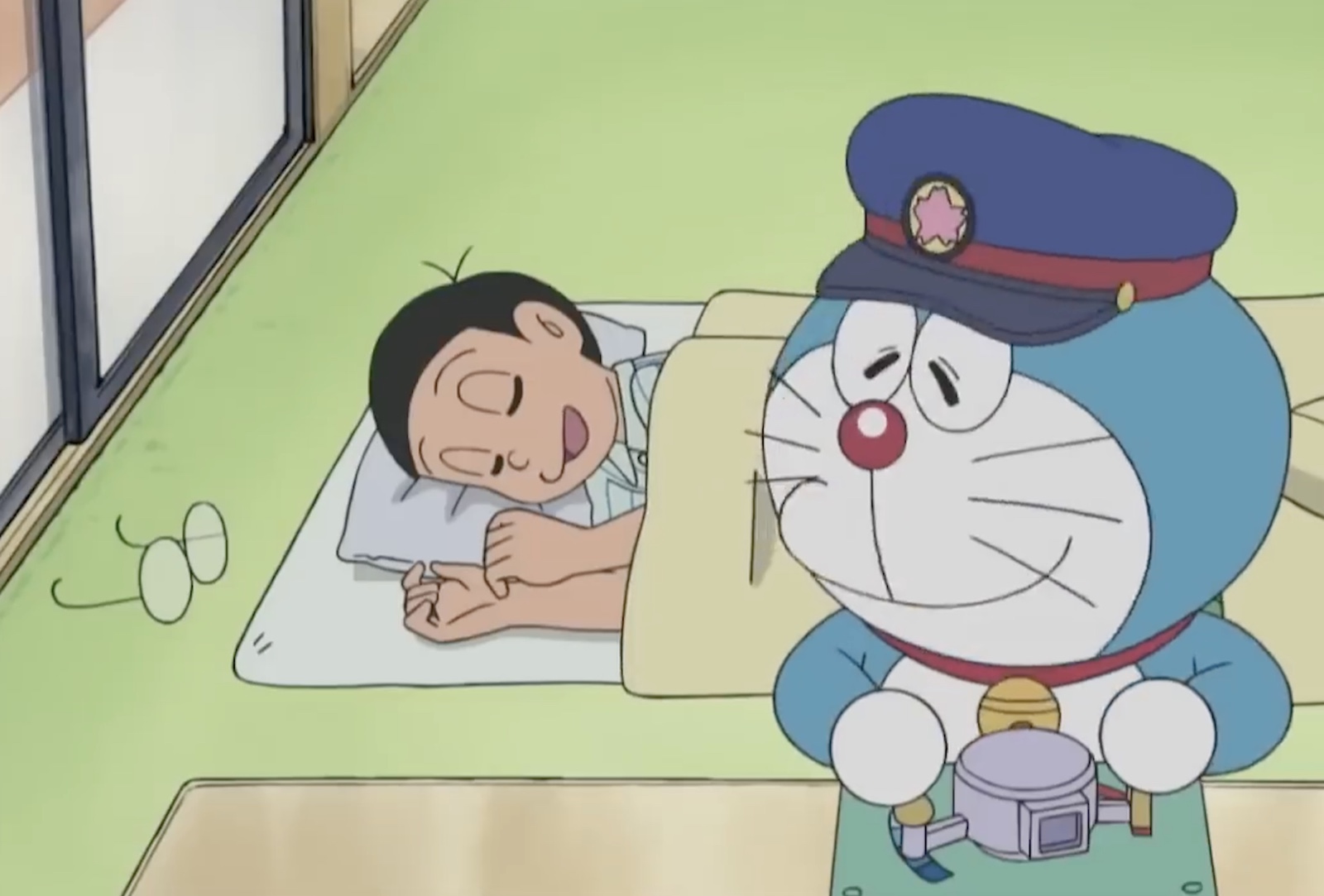
In the 2011 Doraemon episode My House Is a Night Train, Nobita hears about a trip on the Cassiopeia. Then Doraemon uses a gadget to turn the entire Nobi house into an overnight train. In the still, Doraemon is at the controls while Nobita sleeps in his own futon.
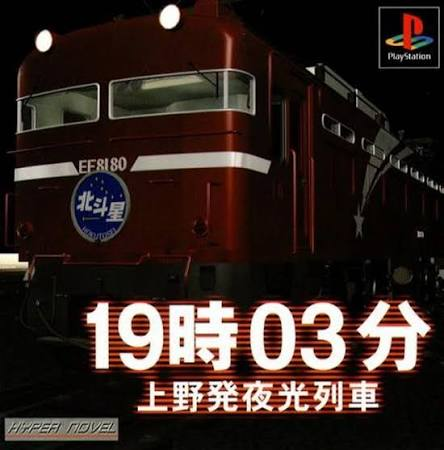
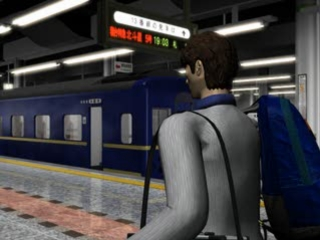
19:03 Luminous Train from Ueno
The Hokutosei even became the setting for a 1999 PlayStation visual novel. In 19:03 Luminous Train from Ueno (19時03分 上野発夜光列車), an ordinary overnight ride turns into a suspense story. The title takes its time from the real Hokutosei No. 5, which left Ueno for Sapporo at 7:03 p.m.
Where to Sleep or Eat in a Blue Train
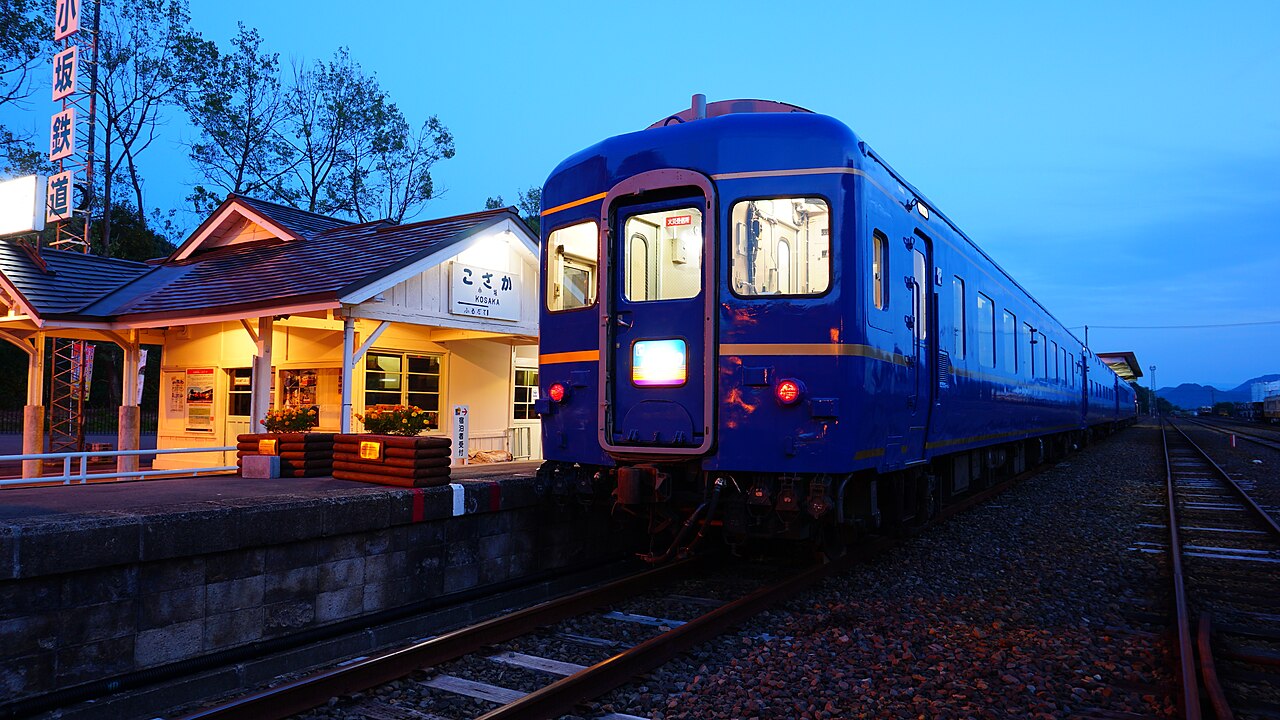
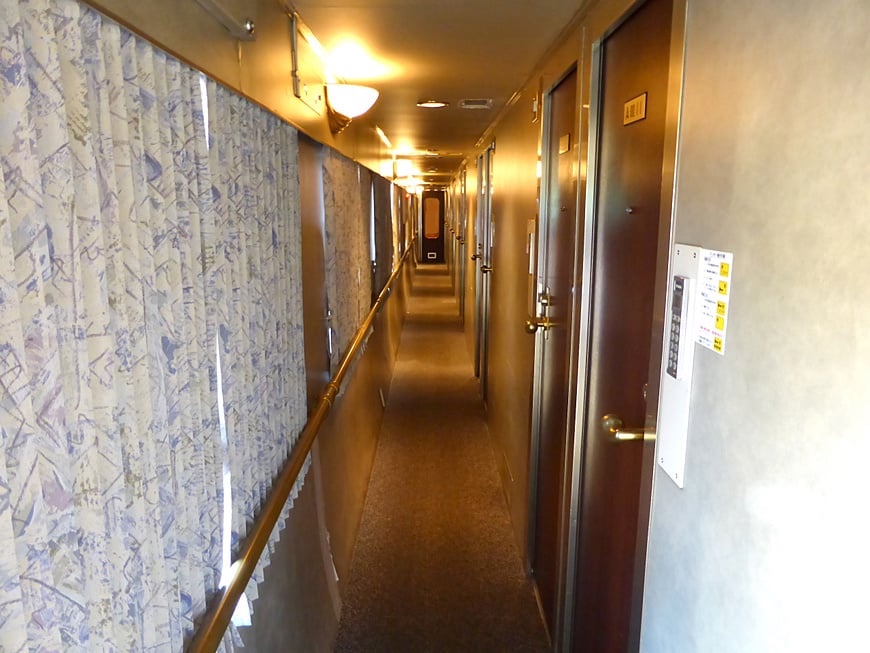
The Akebono at Kosaka Railway Rail Park and the corridor inside its sleeper car.
Kosaka Railway Rail Park, Akita
Kosaka Railway Rail Park turned original Akebono carriages into overnight lodging. Today, you can stay in a private room for one or two guests.
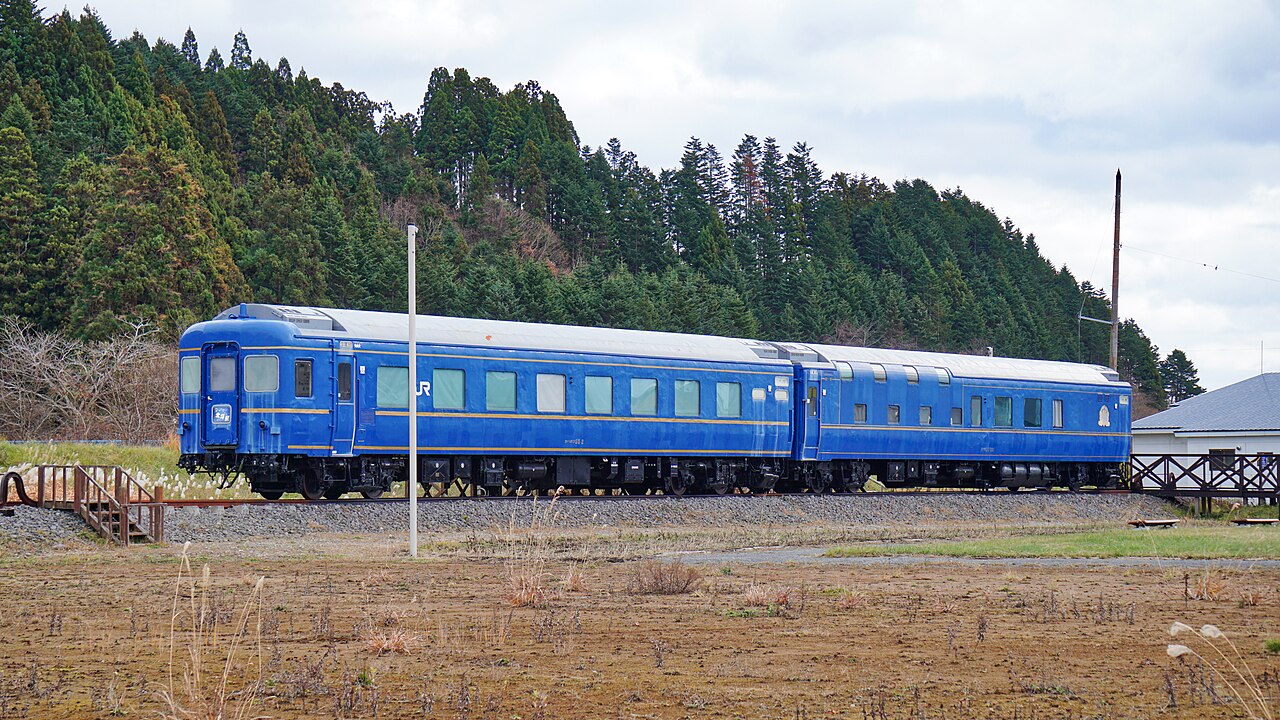
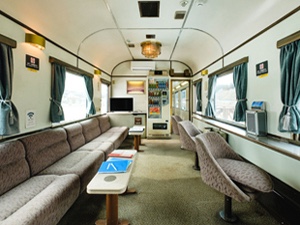
The Hokutosei cars at Moheji and the lounge inside.
Hokutosei Square, Hokkaido
Near Moheji Station, outside Hakodate, Hokutosei Square offers overnight stays in two retired Hokutosei carriages. You can also book a separate cabin on the grounds. Choose the rail-car listing to sleep in the train.
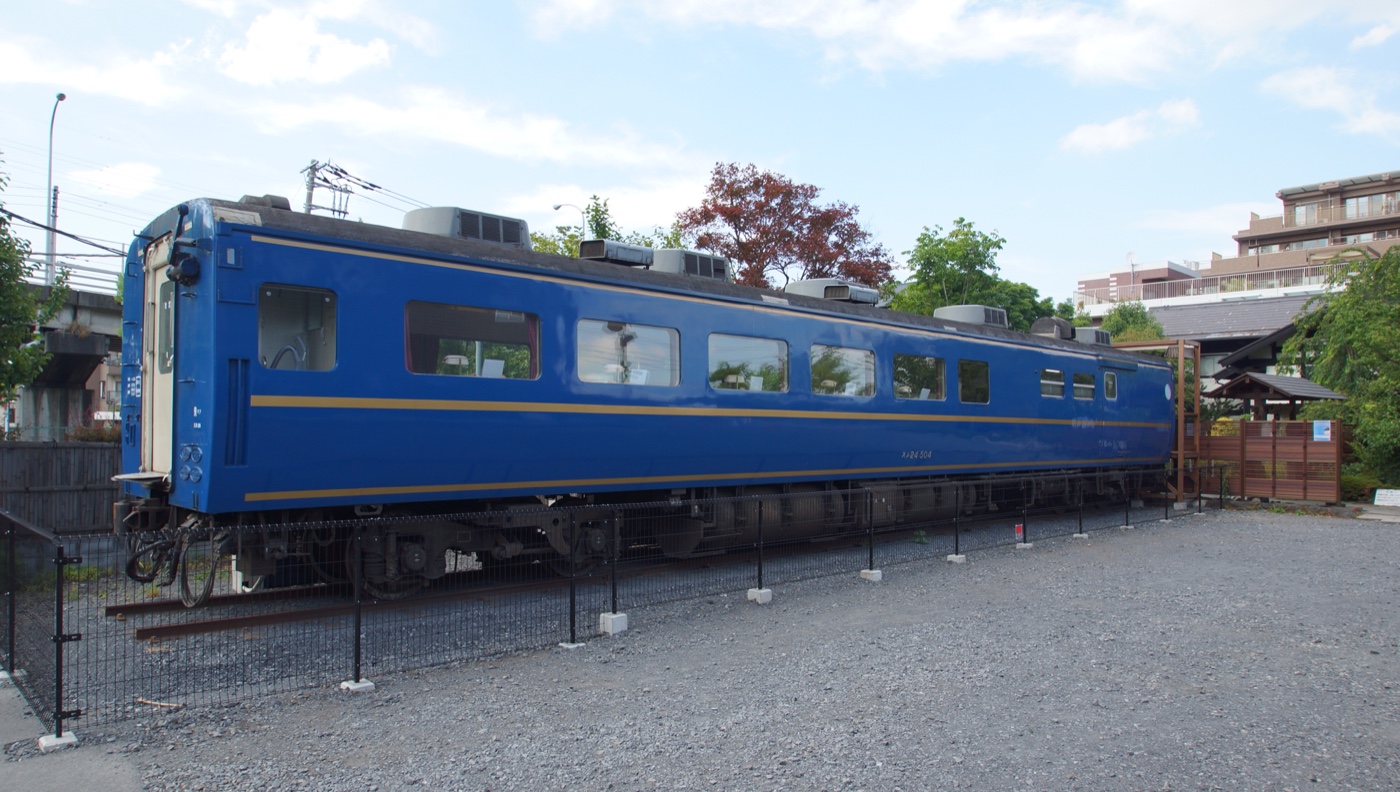
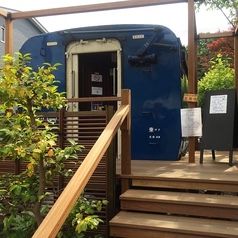
The former dining car at Grand Chariot and its entrance.
Grand Chariot, Saitama
In Kawaguchi, you can stop for lunch or coffee inside a former Hokutosei dining car, a short walk from Higashi-Kawaguchi Station. The restaurant still goes by Grand Chariot, the name of the original dining service. When you book, you can request a table inside the carriage.
Our Night on the Sunrise Express
Sources
Blue Train History
Nippon Sharyo’s Series 20 history · Ginga timetable history · Akatsuki service history · JR East’s Hokutosei history · Akebono service history · The preserved cars · Twilight Express history · JR East’s Cassiopeia announcement · December 1993 sleeper roster
Shinkansen and Sunrise Express
JR Central’s travel-time history · Japan Railway & Transport Review · Sunrise Express chronology · Sunrise livery details · JR Central’s first-run details · JR Central Tours’ September trip · Tokai TV’s report on the September run
Image Credits
The Akebono at Ueno Station, 2012 · Douglas P. Perkins / Wikimedia Commons · CC BY-SA 3.0 · Display crop.

Sunrise Express cabin photos · Solo Travel POV
A Series 0 Shinkansen near Yurakucho, Tokyo, 1967 · Roger Wollstadt / Wikimedia Commons · CC BY-SA 2.0 · Display crop.

The original Akebono cars at Kosaka Railway Rail Park · 掬茶 / Wikimedia Commons · CC BY-SA 4.0

Two Hokutosei sleeper cars at Moheji · 掬茶 / Wikimedia Commons · CC BY-SA 4.0

The former dining car at Grand Chariot in Kawaguchi · © DAJF / Wikimedia Commons · CC BY-SA 4.0 · Display crop.

An N700 prototype at Gifu-Hashima Station, 2011 · spaceaero2 / Wikimedia Commons · CC BY 3.0 · Display crop.

Doraemon still · © Fujiko Pro, Shogakukan, TV Asahi, Shin-Ei Animation and ADK. TV Asahi’s episode guide.
December 1993 Blue Trains map · Solo Travel POV. Coastline from Natural Earth.
19:03 Luminous Train from Ueno cover and gameplay still · © 1999 VISIT. RCGS game catalog.