
Our Stay at Mikiya Ryokan
We chose Mikiya Ryokan for the second night of our three-day Kinosaki Onsen trip. After a day of hiking and bath hopping, we checked into a traditional wooden ryokan, chose our yukata and settled into a tatami room overlooking a small courtyard. That evening, dinner became one of the highlights of the whole trip: a kaiseki meal built around three Matsuba crabs for the two of us.
Mikiya is our recommendation for a traditional ryokan stay with time to enjoy the inn itself. There is a library lounge, a Japanese garden, shared hot spring baths and two private baths, alongside the public bathhouses around town. It makes a lovely base for a slower visit to Kinosaki.
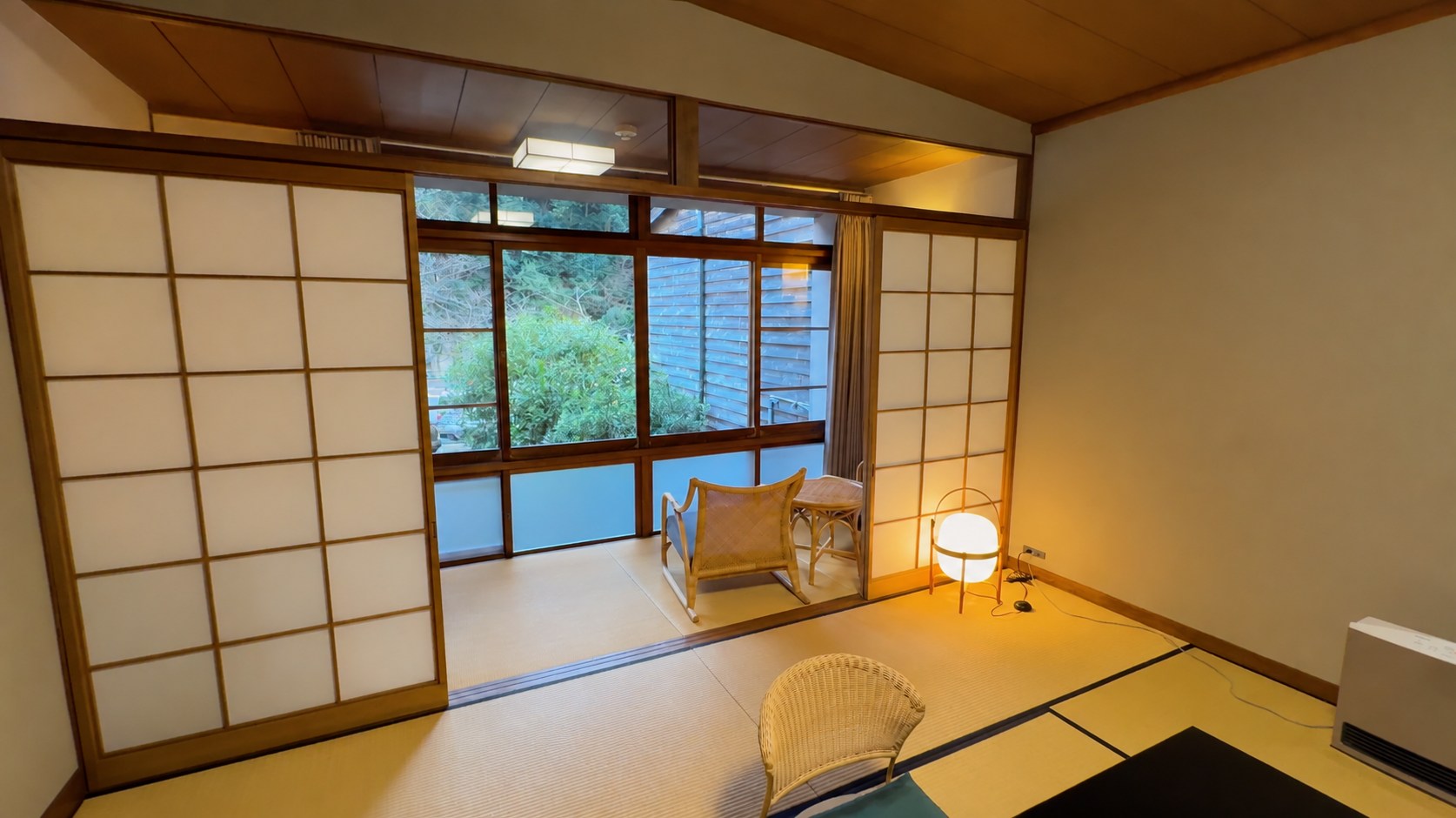
Our Room: Japanese-style eight-tatami room on the second floor, with a courtyard view.
Our Stay: One night for two people, including a crab kaiseki dinner, Japanese breakfast, public onsen passes and use of the ryokan’s baths.
Stay at Mikiya Ryokan
A traditional ryokan stay in Kinosaki Onsen, with courtyard views, private hot spring baths and a memorable Matsuba crab dinner.

We may earn a commission when you book through our Agoda link, at no extra cost to you.
What We Booked — Garden-Facing Japanese-Style Room
We stayed in the Eight-Tatami Japanese-Style Room with a Garden View, on the second floor. The hotel lists this category as a garden-facing Japanese-style room, with layouts ranging from eight to ten tatami mats. Our main tatami area had a low table and floor seating, with chairs beside the window. Sliding screens opened onto the garden view, so there was somewhere to sit with tea without moving the room around.
Our eight-tatami room, with window-side seating and a low table.
The courtyard outside our window was a small enclosed garden with moss, trees and a stone lantern. It was different from the larger garden beside the lobby. If the garden view is a priority for your stay, check the room category carefully: Mikiya lists courtyard-facing and garden-facing rooms separately.
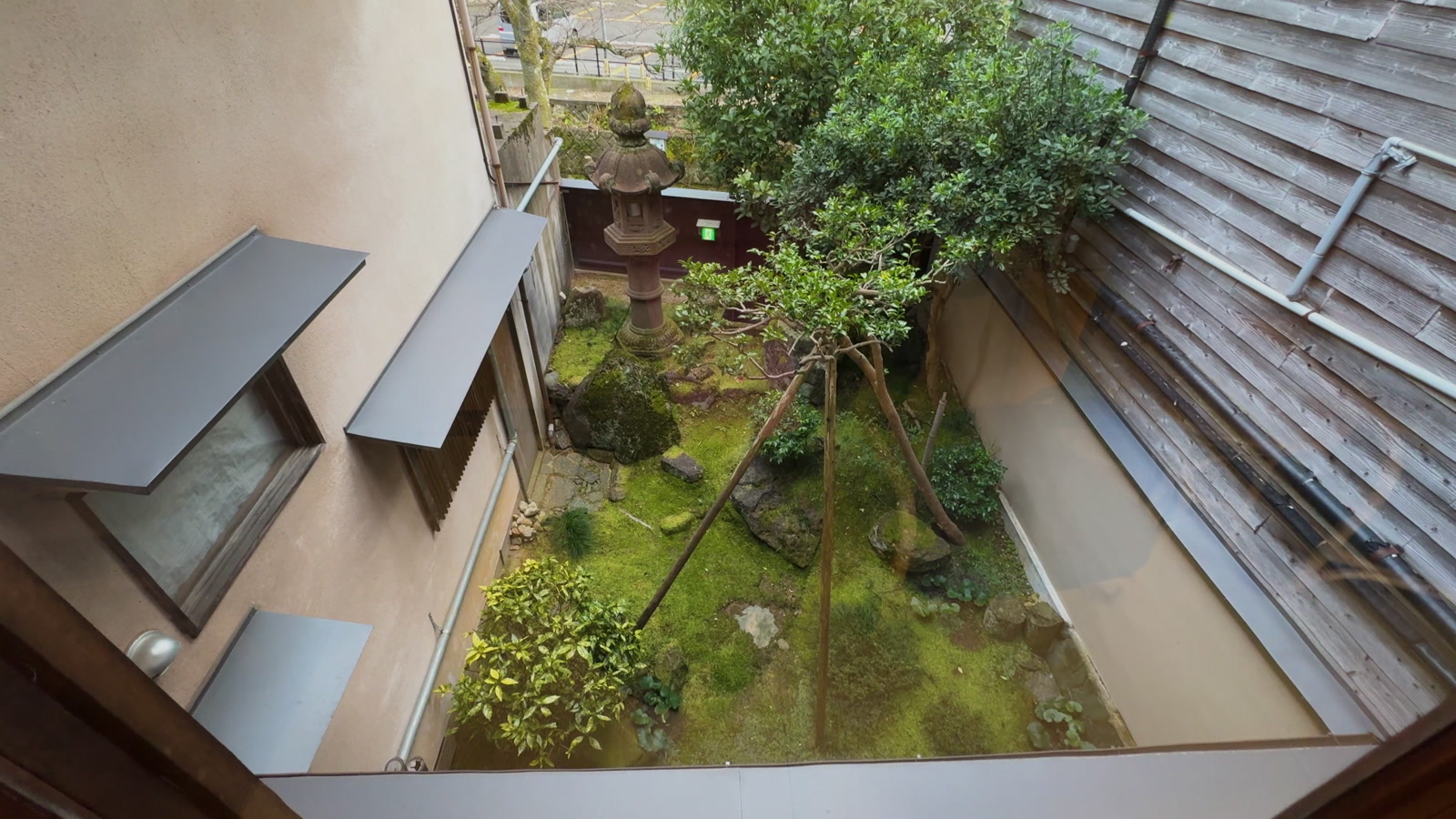
The smaller courtyard seen from our second-floor room.
Room amenities listed by the ryokan include a TV, refrigerator, kettle and tea set, individual heating and air conditioning, hair dryer, safe, Wi-Fi and a toilet with a bidet. Yukata, towels and toothbrush sets are provided, with additional grooming items in the baths. Our room used futon bedding; Mikiya also offers room types with Western-style beds. See the official room descriptions for the layout you are booking.
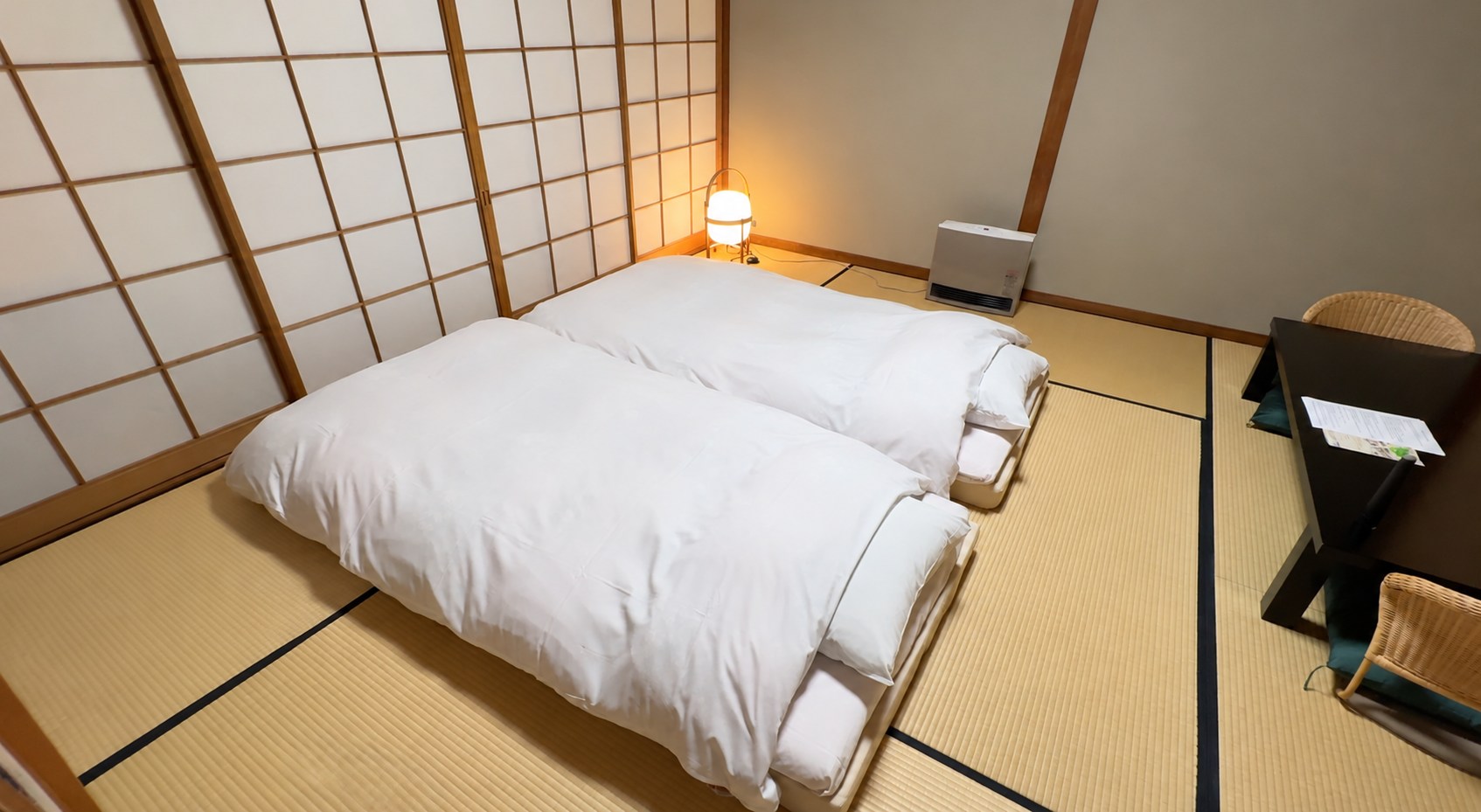
While we were at dinner, staff prepared our futons for the night.
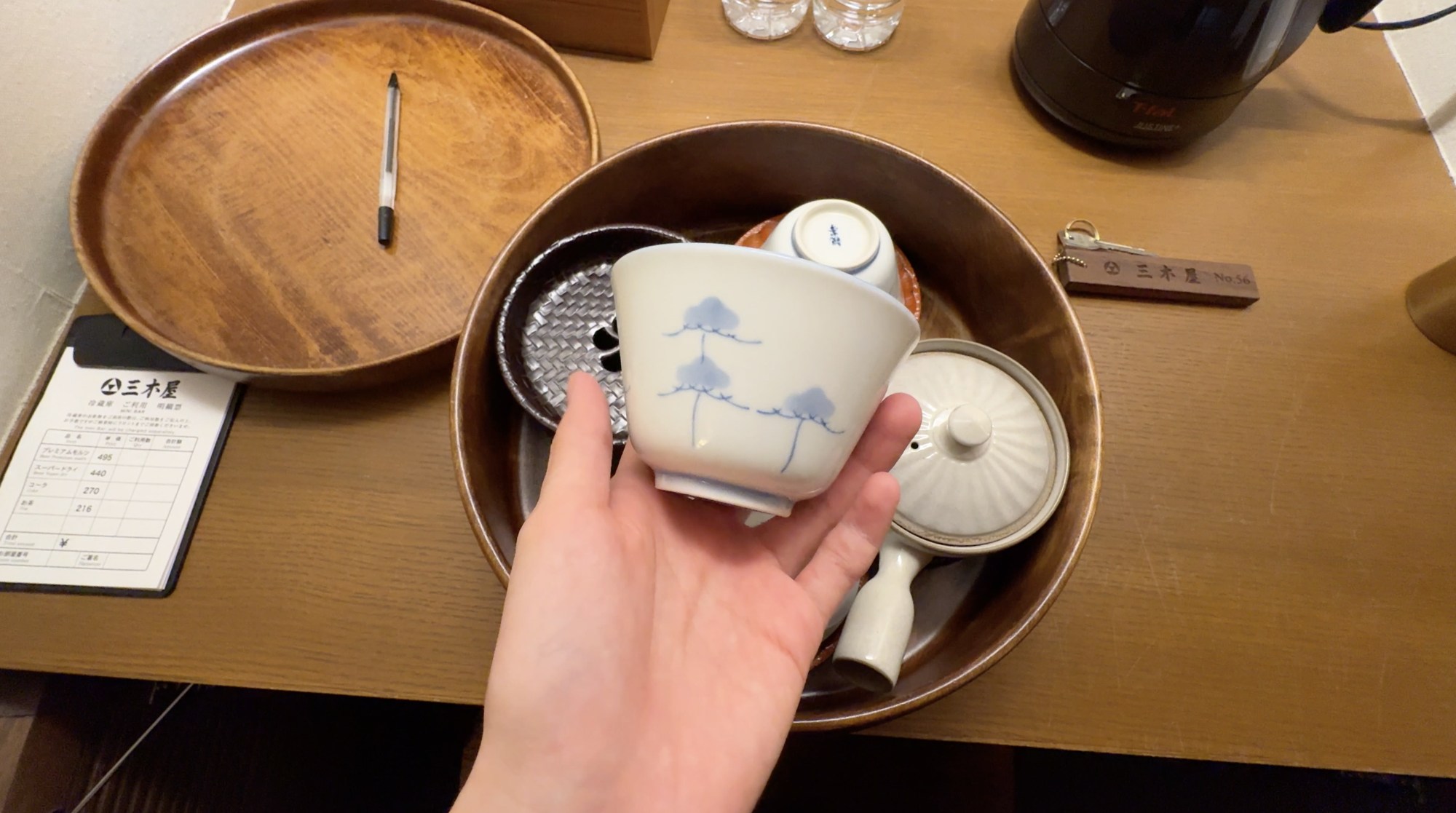
The room’s tea set, ready for a quiet cup beside the courtyard.
Tea, Yukata and a Garden-Facing Lounge
Check-in began with tea and cookies in the lobby. The seating looks toward the garden, and the adjoining library and complimentary coffee station gave us another reason to linger before heading upstairs. We had already spent much of the day on our feet, so sitting down here felt especially good.
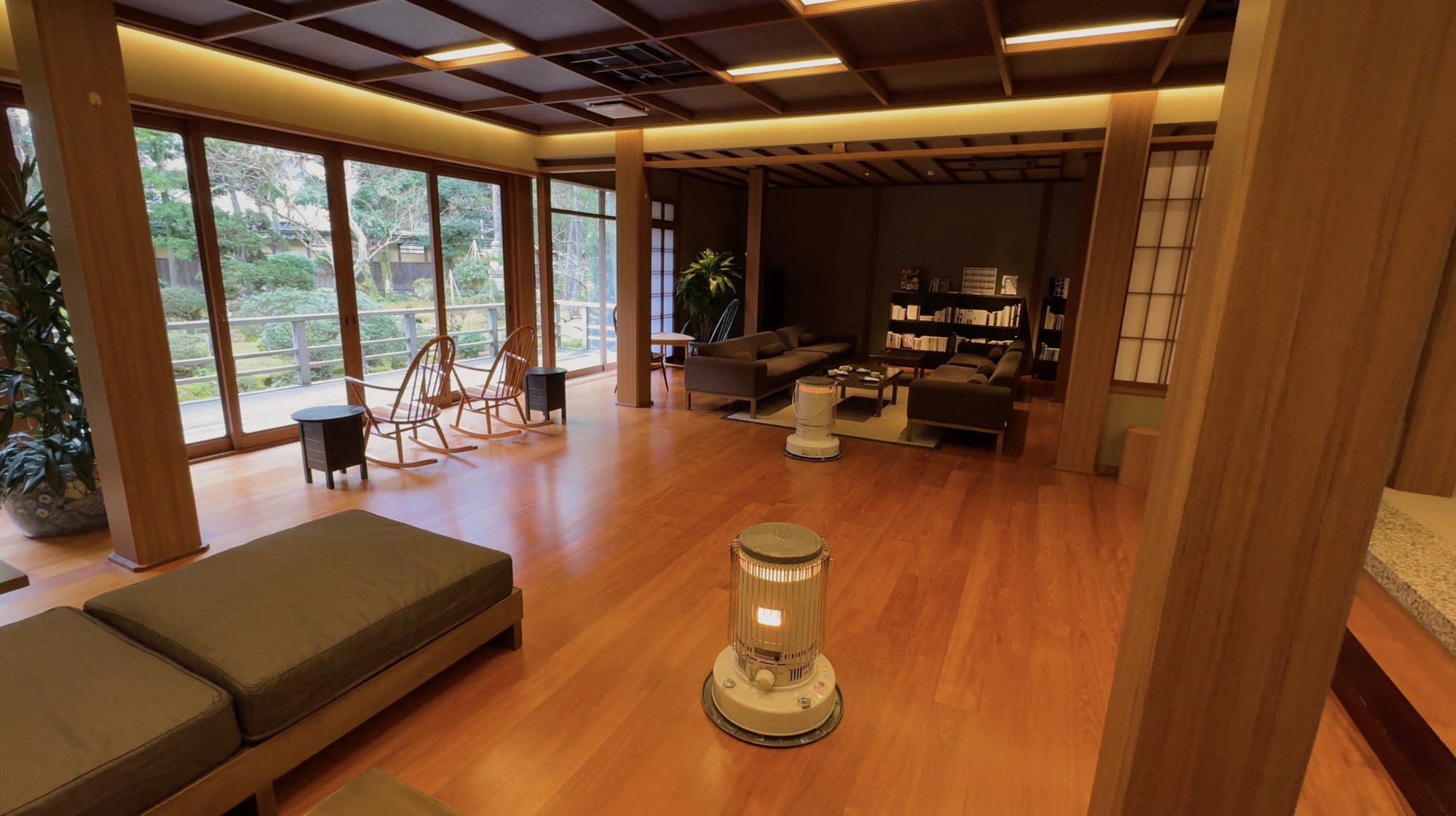
The lobby looks out toward Mikiya’s Japanese garden.
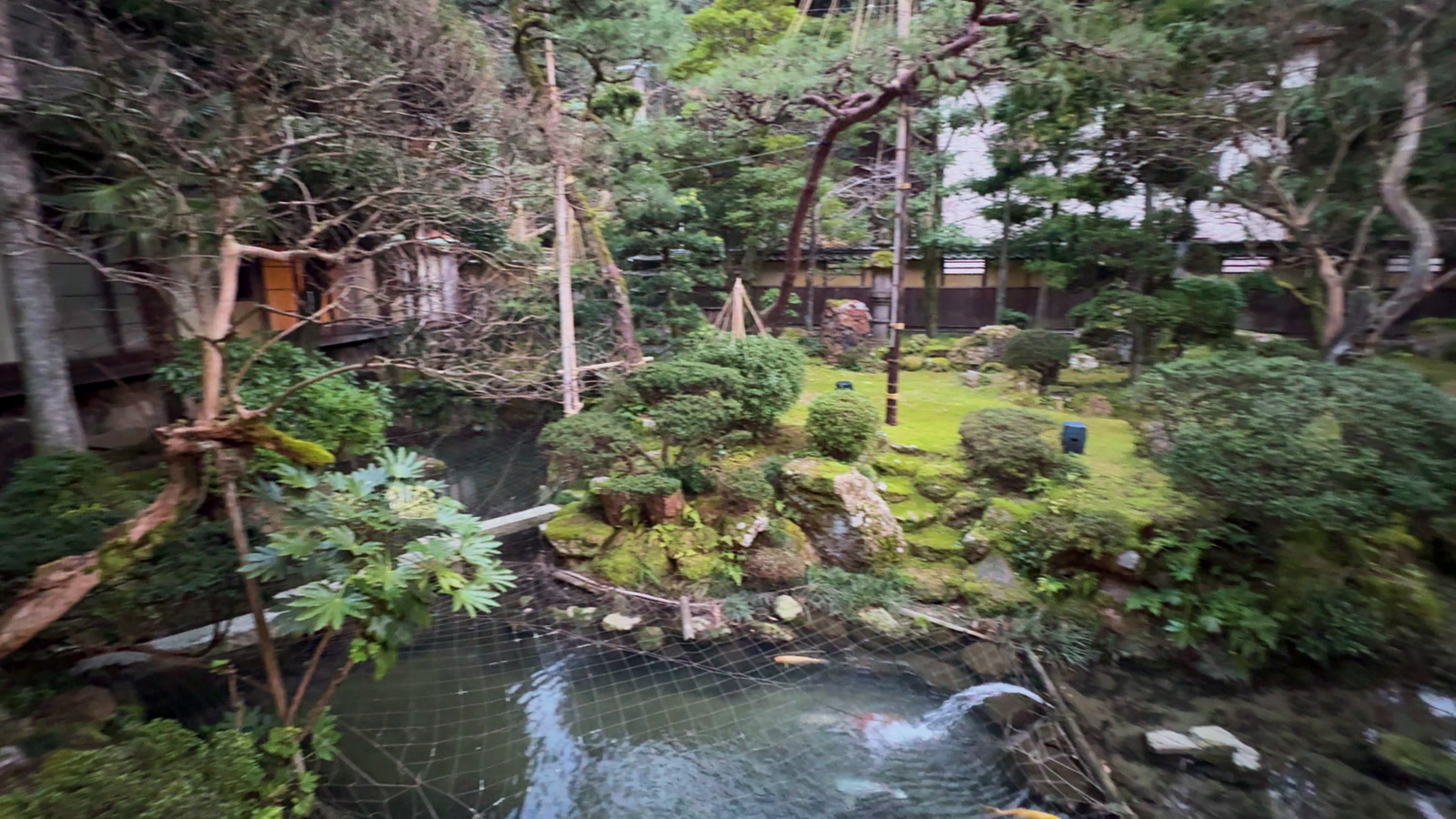
Moss, stone and water in the garden behind the inn.
We were then invited to choose our own yukata. If you have your heart set on a particular pattern, try it for size rather than assuming every design will fit. The shop also had ceramics and yukata for sale.
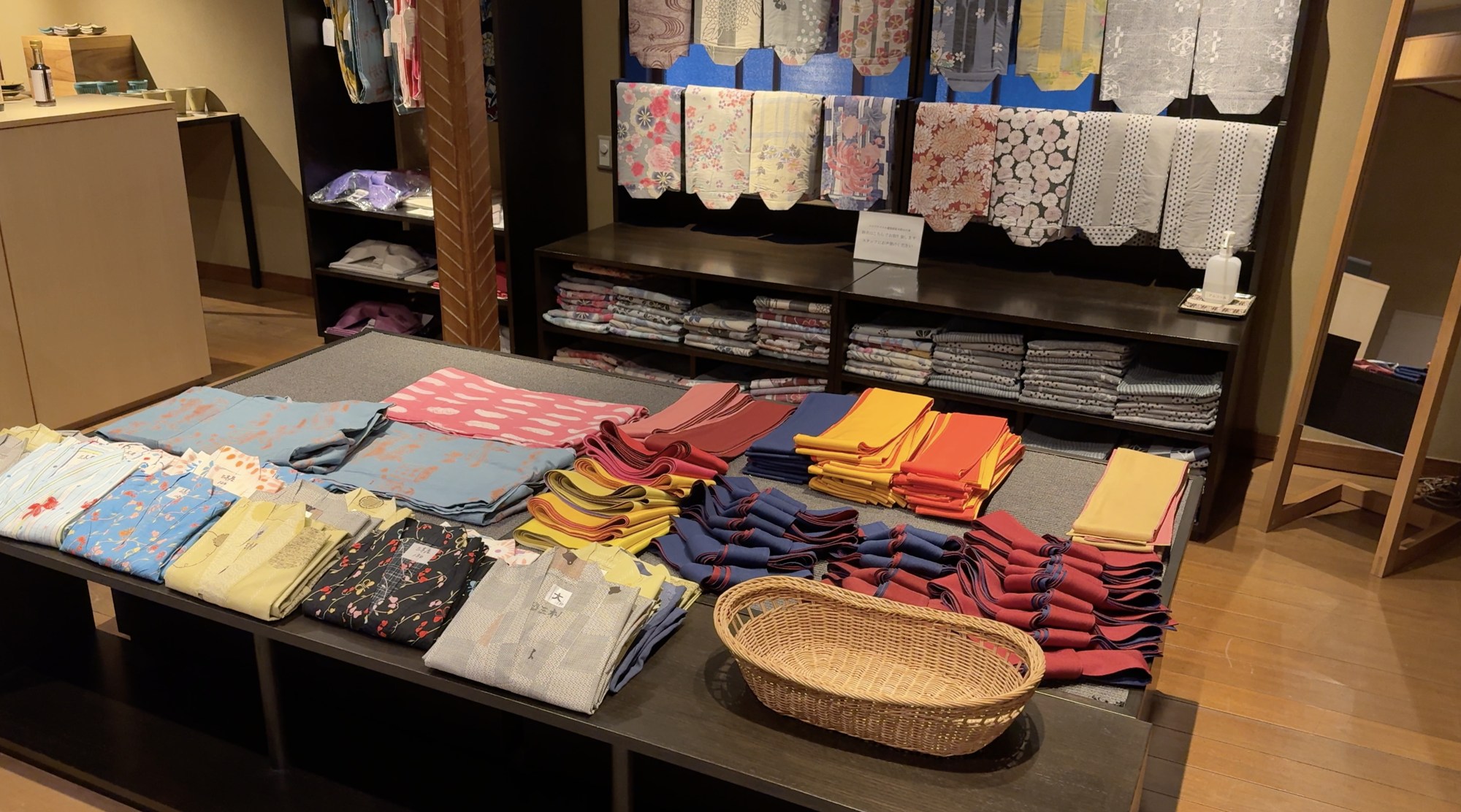
Choosing a yukata is part of settling into the stay.
A Ryokan with More Than Three Centuries of History
Mikiya Ryokan traces its origins to the late seventeenth century. The English written guide provided in our room explains that the inn’s founding family descended from a soldier connected with Miki Castle, and that the name Mikiya preserves that connection. The present wooden building dates largely to its reconstruction in 1927, and the inn is a registered tangible cultural property.
The writer Naoya Shiga first stayed here in 1913 while recovering from a train accident. His time in the town inspired At Kinosaki, and he continued returning to Mikiya for decades. That literary connection gives the library more meaning than a decorative shelf of books. You can read more in Mikiya’s account of its history ↗.
A Traditional Ryokan That Welcomes English-Speaking Guests
Mikiya felt very approachable as English-speaking visitors. The information in our room explained the baths, meal times, yukata, check-out and transport in English. Even the wooden bath signs had English underneath the Japanese. Those practical details made it easy to settle into the ryokan routine without feeling that we needed to know everything already. It fits Kinosaki’s welcoming atmosphere as a town used to helping visitors enjoy their first onsen trip.
If you are unsure how to wear your yukata, the front desk can help, and the room information book includes instructions. Wearing it around town and to dinner is part of the experience. The provided bath bag has separate space for wet and dry items, and paper insoles let you mark your slippers so you can recognize them after bathing. We gave ours little cat faces.
The room also had an English notice about seasonal stink bugs in the area. It explained that they can slip indoors through small gaps and release a strong smell when disturbed. If you spot one, leave it alone and call the front desk rather than trying to handle it. The instructions in our room said to dial nine. Even the stink bug notices are in English here!
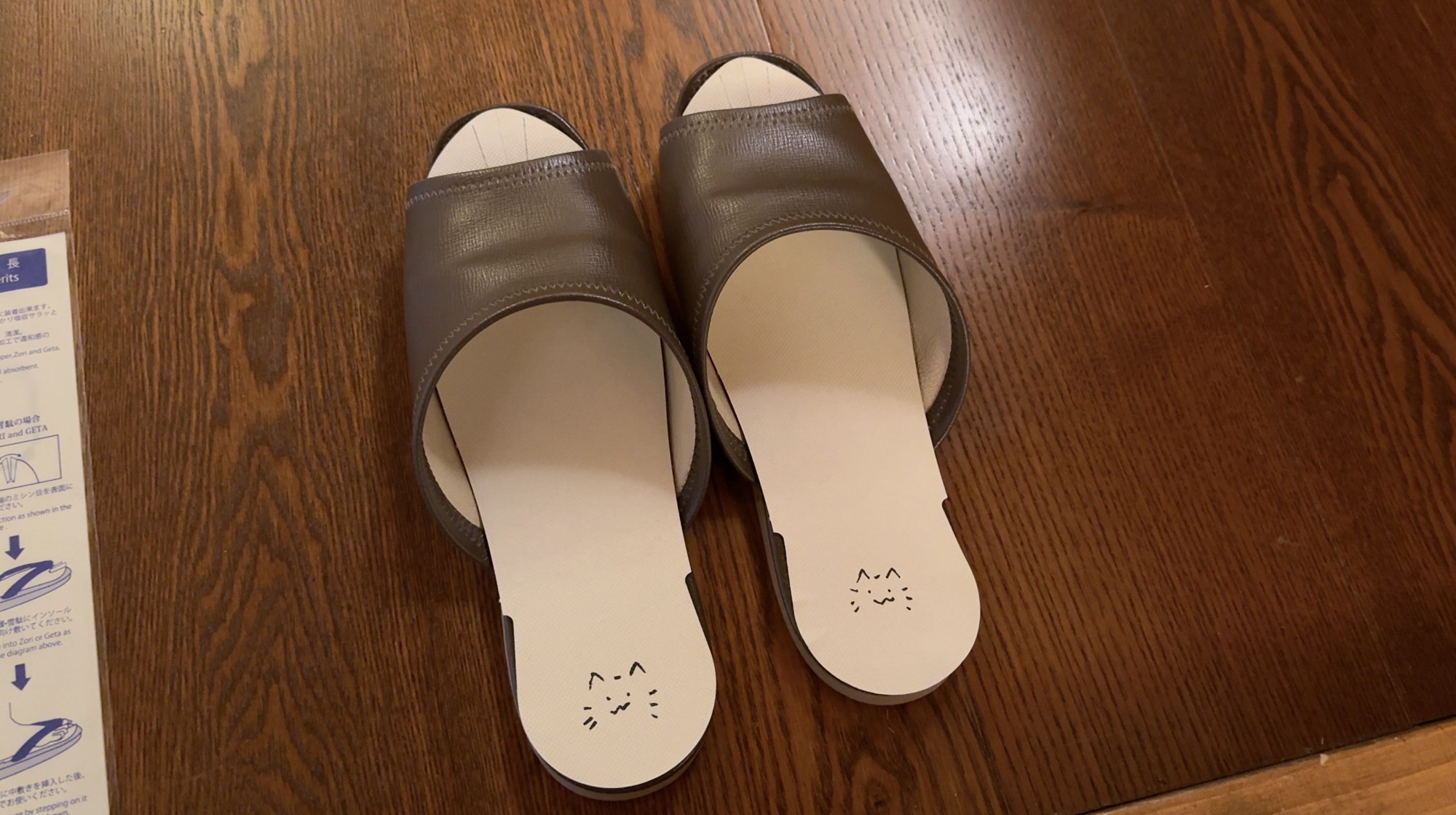
Our small addition to the slipper markers: matching cat faces.
Private Baths and Kinosaki’s Public Onsen
Mikiya Ryokan has two shared indoor baths and two private onsen: Futami no Yu (二見の湯) and Kuruhi no Yu (来日の湯). Futami no Yu has a spacious granite tub, while Kuruhi no Yu has an Aomori hiba wooden tub. Both are separate from the guest rooms and available for private use, making them a lovely option for couples or anyone who prefers to bathe in their own space.
There is no advance reservation for either private bath. If the door is unlocked and the wooden sign says vacant, you can go in. Turn the sign to occupied, lock the door from inside and enjoy the bath. When you leave, unlock the door and turn the sign back to vacant. Our English guide asked guests to keep their visit within about one hour so others could enjoy it too.
Futami no Yu
二見の湯
Kuruhi no Yu
来日の湯
Tap either sign to turn it over. These illustrate the signs at Mikiya; they do not show live bath availability.
Both private baths are listed as open from 3 p.m. to midnight, then from 6 to 10 a.m. See Mikiya’s private bath information ↗ and confirm the arrangements at check-in.
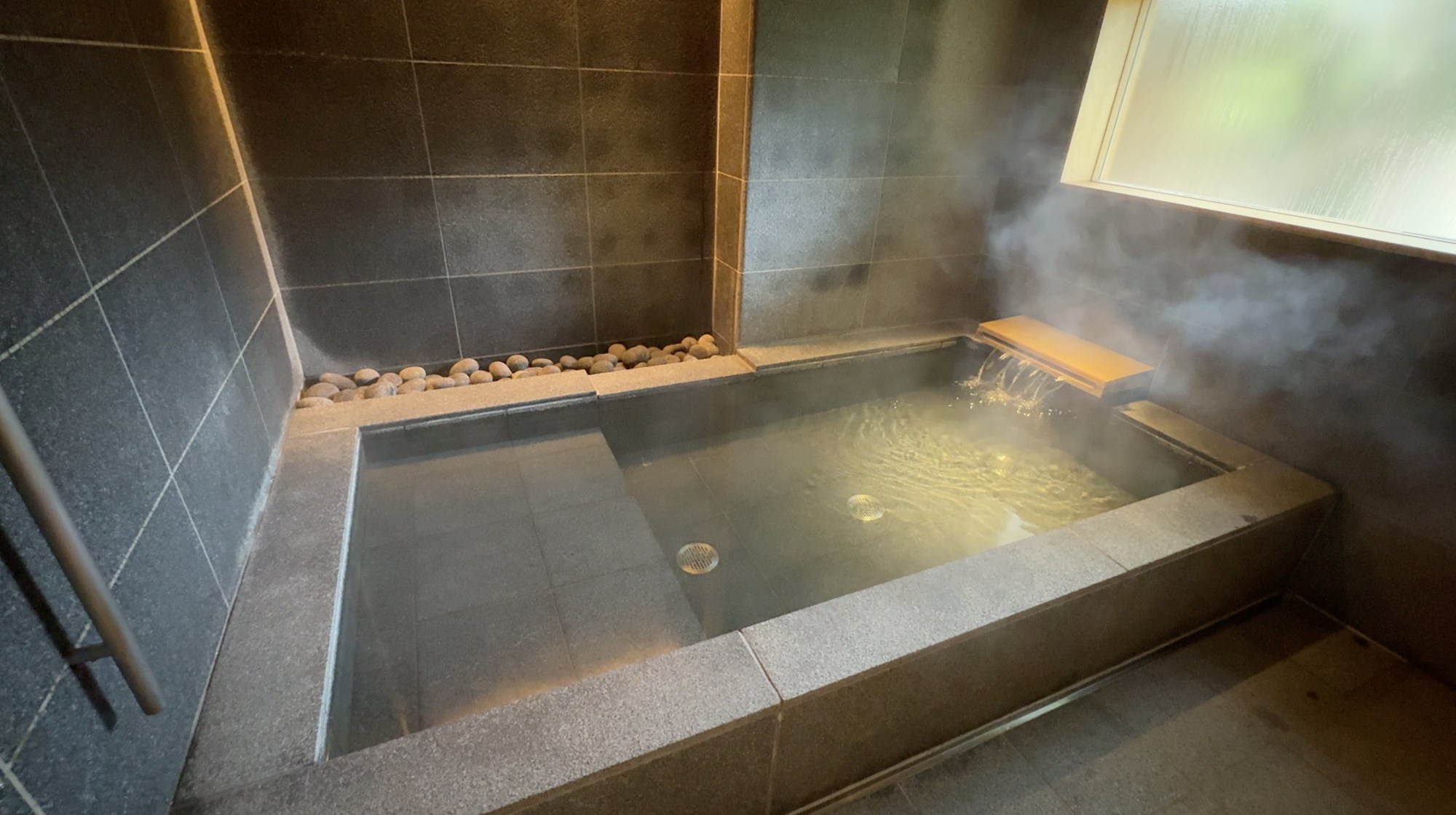
Futami no Yu (二見の湯), the larger private bath with a granite tub.
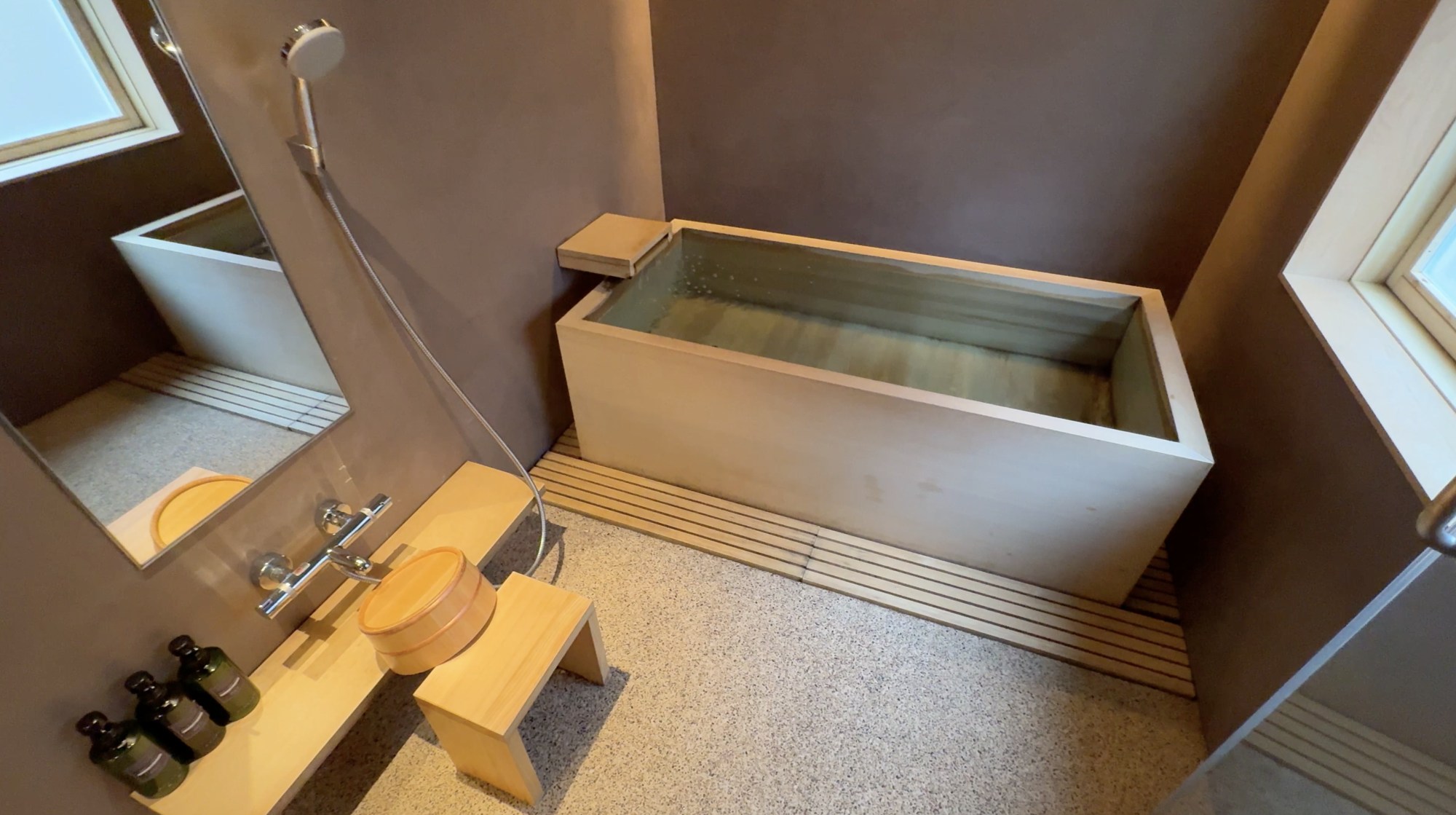
Kuruhi no Yu (来日の湯), with its fragrant Aomori hiba wooden tub.
The shared baths are Tsutsuji no Yu and Hiiragi no Yu. They switch between men and women in the evening, so follow the curtain and entrance signs each time. During our stay, the English guide identified pink curtains for women and blue for men. Bring the towels from your room, including when using the private baths, and keep towels out of the bathwater. See the shared bath information ↗ for the current arrangements.
Our stay also included passes for Kinosaki’s public bathhouses. Before dinner, we walked about two minutes to Goshonoyu, where the outdoor waterfall bath was a favorite. Having the ryokan so close meant we could go out for another soak without turning it into a long excursion. Check current bathhouse openings and closures when you arrive.
Our Matsuba Crab Kaiseki Dinner
We booked a crab kaiseki plan, and three whole Matsuba crabs were used across dinner for the two of us. The meal brought out different sides of the same ingredient, from raw crab served over ice to grilled and boiled preparations. It was the kind of dinner we wanted to leave the evening free for.
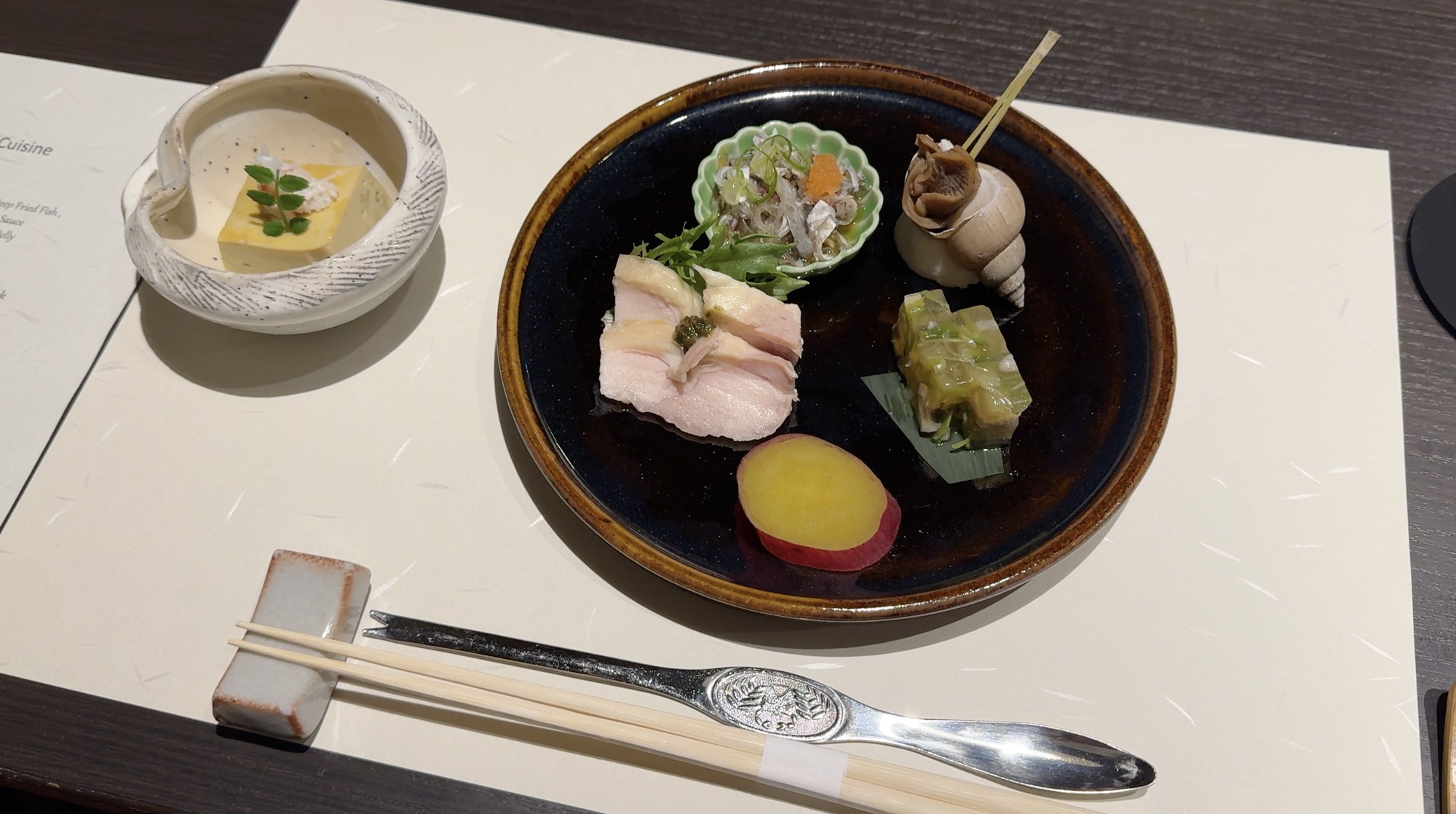
Seasonal small dishes at the start of our kaiseki dinner.
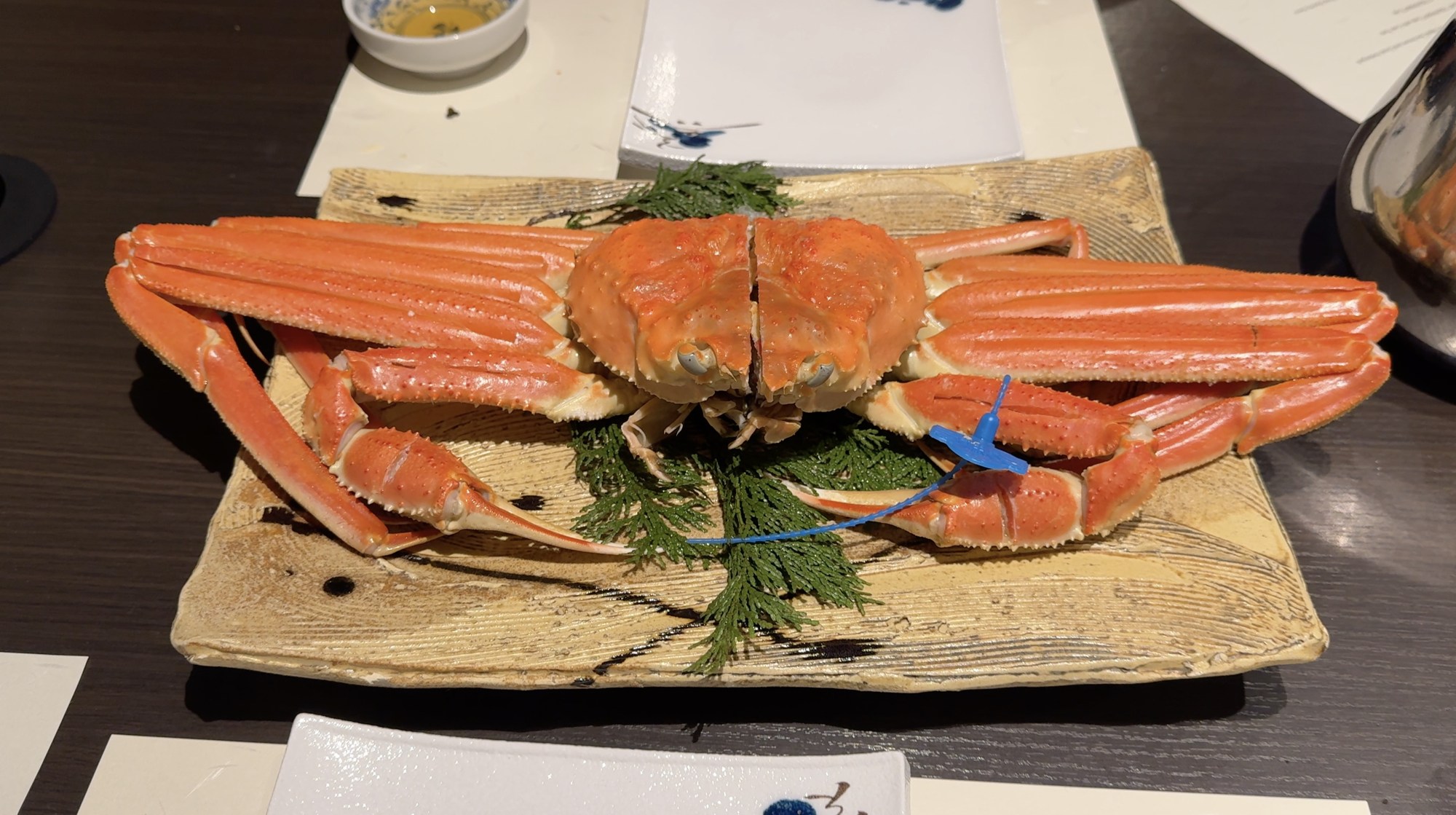
Matsuba crab was the centerpiece of our winter dinner.
These crab legs held thick pieces of meat. The boiled crab with a vinegary dipping sauce was a particular favorite!
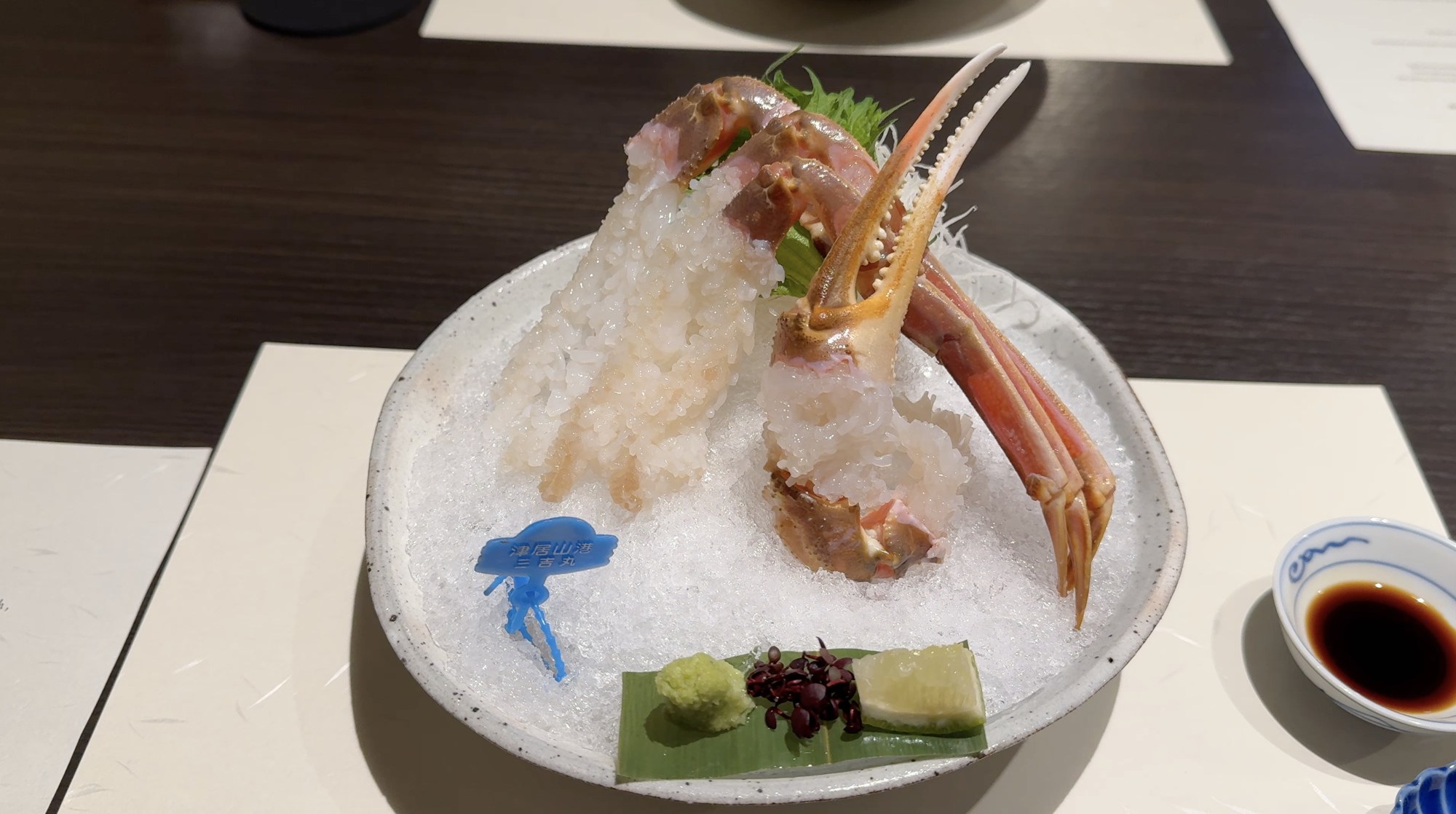
Crab sashimi served on ice.
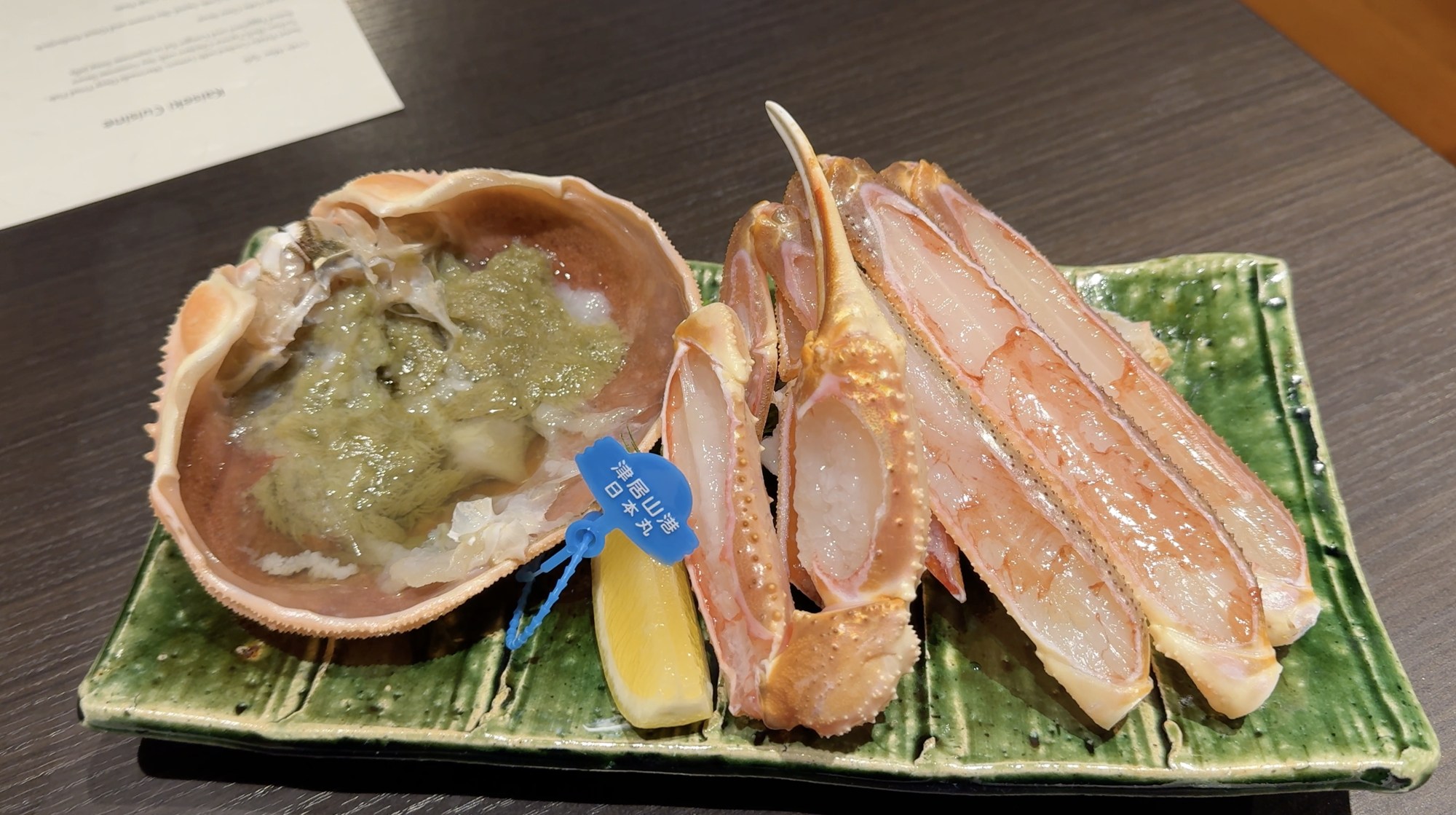
Crab legs and crab miso, another preparation in our winter kaiseki dinner.
Just when we thought we were nearing the end, another dish arrived. Dinner continued through cooked crab dishes, rice and soup, then dessert. The variety made it much more interesting than simply working through a large plate of crab.
Meals are served in the dining room rather than in your guest room. Our dinner choices were 6 or 6:30 p.m., and the English information sheet suggested allowing about two hours for the courses. Choosing the earlier sitting leaves more of the evening for a stroll through Kinosaki. Our crab feast was part of a specific winter plan; Mikiya offers other seasonal menus too, including Tajima beef. Choose the room and dinner plan together, and contact the ryokan in advance about dietary needs. Explore Mikiya’s seasonal cuisine ↗.
Japanese Breakfast Before Checking Out
A traditional Japanese breakfast was included the next morning. Our tray had grilled fish, an egg, salad, pickles and several small dishes.
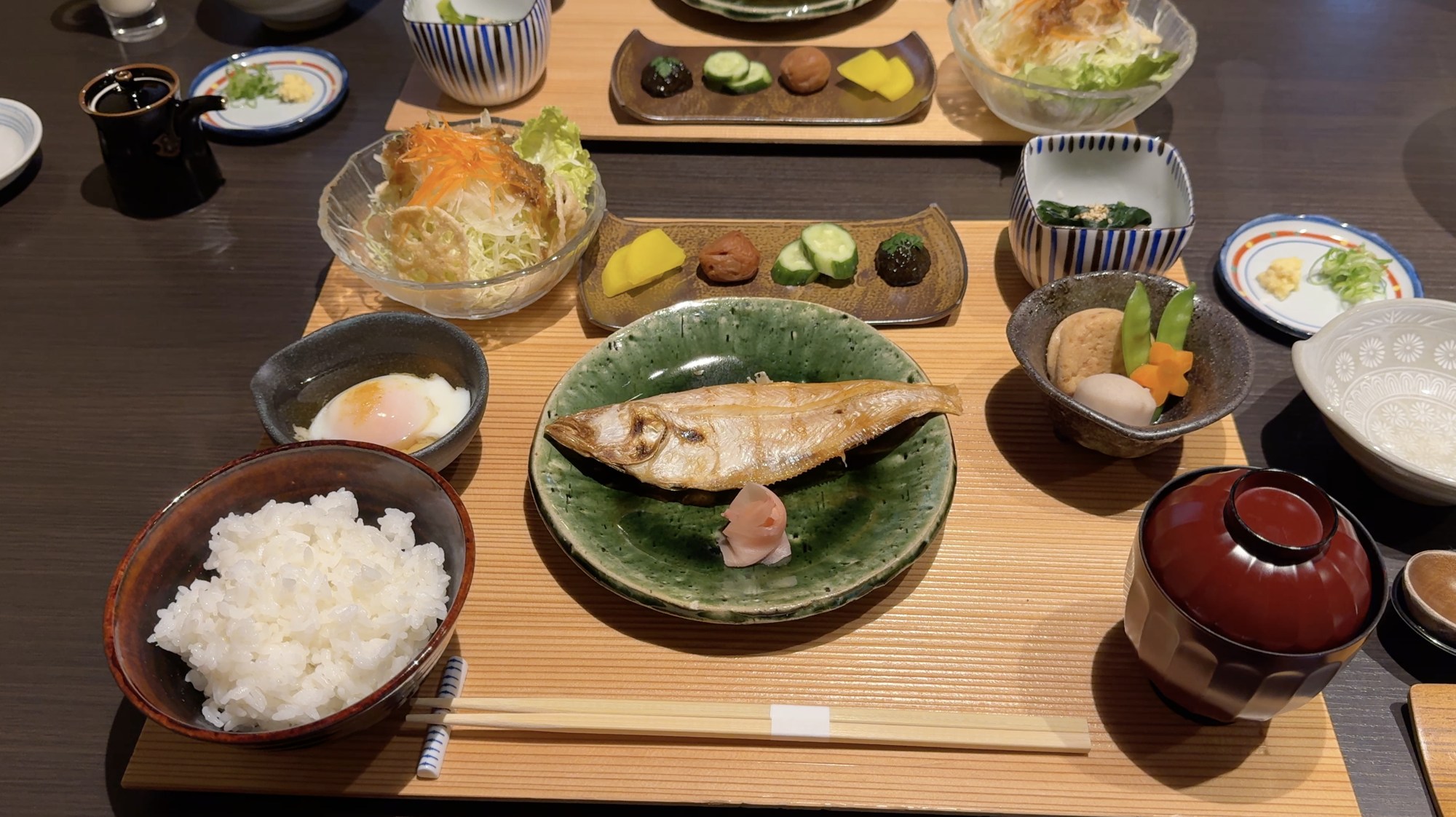
Our Japanese breakfast at Mikiya the following morning.
Check-out was at 11 a.m., which left time for an early bath as well as breakfast. We went out to Konoyu that morning and soaked outdoors in a light drizzle. For us, that was a lovely way to finish the ryokan stay before continuing around town.
Getting to Mikiya
Mikiya Ryokan is at 487 Yushima, Kinosaki-cho, Toyooka, Hyogo, about a 15-minute walk from JR Kinosaki Onsen Station. Its position in the main onsen town made it easy to walk to bathhouses and shops during our stay.
Free guest parking is available opposite the inn, with staff directing arrivals.
Planning a Stay at Mikiya Ryokan
Check-in: 3 p.m. to 6:30 p.m.
Check-out: 11 a.m.
Physical access: The historic building is not step-free and has no elevator. Some stairs are steep. First-floor rooms are available, but there are still some changes in level; discuss your needs with the ryokan before booking.
Watch Our Kinosaki Onsen Trip
See our room, the private baths and the crab dinner in our full Kinosaki video. The Mikiya stay begins around fourteen minutes in.